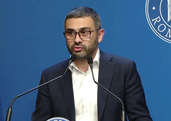
Acting Health Minister Cseke Attila said on Tuesday that 3,121 contracts funded through the National Recovery and Resilience Plan (PNRR) had been completed during his tenure as interim head of the institution. According to him, the absorption rate reached 97% for non-repayable funds and 100% for the loan component.
In a message posted on Facebook, Cseke Attila said he had taken on responsibility for leading the ministry with the aim of ensuring continuity and accelerating projects of importance to the healthcare system.
I accepted this responsibility with seriousness, commitment and the conviction that people's health must remain a priority, regardless of the political circumstances. This is a field close to my heart and one in which I believe every decision must start from the real needs of patients, medical staff and everyone who works day in, day out to make the healthcare system function better. As of today, the Health Ministry will have a fully empowered minister. This is a natural and necessary step to ensure continuity, stability and responsibility in the coordination of a field that is so important to every one of us,' the minister said.
One of the main objectives of his interim tenure was to accelerate projects funded through the PNRR. According to Cseke Attila, the 3,121 completed contracts are helping to modernise Romania's healthcare infrastructure.
In the results he presented, the acting minister listed seven completed hospitals, 188 hospitals that had undergone digitalisation and 94 public health institutions that had been digitalised, including public health directorates, ambulance services, the Ministry of Health and the National Agency for Medicines and Medical Devices of Romania. In addition, 536 medical practices and groups of practices had been renovated or equipped, while 66 outpatient care facilities had been built or renovated. A further 115 public hospitals had received equipment and supplies intended to reduce healthcare-associated infections. Seventy-eight integrated community centres had been built, renovated and equipped, while investments had been made in neonatal intensive care infrastructure at 35 intensive care units.
He said particular attention had also been paid to the digitalisation of the healthcare system. The acting minister highlighted the development of the new Health Insurance Information Platform (PIAS), a project he considers essential for improving the efficiency of healthcare services and simplifying administrative procedures.
At the same time, we managed to unblock work at the Marius Nasta Institute of Pneumophthisiology - Zerlendi Centre and unlock more than 6,800 positions for recruitment across the healthcare system. These are important measures because a strong healthcare system needs both modern infrastructure and sufficient numbers of well-trained staff. I also sought to ensure the necessary funding flows so that healthcare facilities could operate under the best possible conditions and made progress in discussions on the unified pay law,' Cseke Attila also wrote.
The acting minister wished the new Health Minister and his team every success, stressing that the healthcare system needs continuity, stability and decisions that address the needs of patients and medical staff.