



Four immense enclosing rings of earthen ramparts, resembling medallions, stretch across the plains near Cornesti, Ortisoara, Seceani, and Murani, close to Timisoara.
For those traveling the area on foot, the rings are almost imperceptible, but from the air, their grandeur is revealed.
These are the concentric enclosures of Cornesti, covering 17 hectares, making it the largest Bronze Age fortification in Europe. Constructed over three millennia ago for defensive purposes, the ramparts were first documented in 1725 on the so-called "Mercy Maps" (after Florimund Mercy, governor of Banat, following the Habsburg army's liberation of the Banat from Ottoman occupation led by the Prince of Savoy).
Archaeologist Leonard Dorogostaisky, a volunteer with the National Museum of Banat (MNB) team conducting research at the site, suggests that Cornesti may have been more than just a fortification - possibly a religious center and an early astronomical observatory.
Early archaeological literature attributed the site to the Avar period, while later interwar research linked it to the Bronze Age, specifically the Troy period. Recent surface surveys by MNB archaeologists Doru Micle, Liviu Maruia, and Leonard Dorogostaisky identified three settlements within the fortified area, belonging to the Early Copper Age, Middle Bronze Age, and Early Iron Age.
Over the past 20 years, systematic excavations at the Cornesti ramparts have uncovered prehistoric ceramic fragments dating back to the Early Iron Age.
Dorogostaisky told AGERPRES that the Cornesti fortress deserves greater promotion and should be considered for UNESCO recognition. He also suggested opening a museum point at the site, especially since the depths of the fortification may conceal areas used for mystical rituals, little known today.
MNB Director Claudiu Ilas explained that listing the Cornesti fortification as a UNESCO heritage site would require significant funds to expropriate landowners in the area - resources the state currently lacks.
"At Cornesti, research is conducted on both the Iarcuri fortification (Late Bronze Age) and the Cornet fortification (Middle Bronze Age). We are trying to identify external funding sources for the museum, whose technical project is complete. Discussions about UNESCO status may only be possible in the next 20-30 years. Besides expropriation costs - roughly 30 million euros - the documentation alone would cost about 400,000 euros, funds not currently available. Other essential steps are needed to protect and scientifically and culturally valorize the site. The sanctuary may be spectacular, but the ramparts area is the largest Bronze Age structure in the world," said Claudia Ilas.
Leonard Dorogostaisky noted that the smallest inner enclosure, near Timisoara in size, shows evidence of habitation but also activities related to observing the sun, winter solstice, and eclipses.
"The Cornesti earthen ramparts are a great enigma. Not only are they the largest in Europe, but settlement traces cover only about 5% of the site. It's curious. My explanation, also presented in a film I made, relies heavily on satellite images, which act like a map. Having a 'map' from 3,000 years ago showing the scale, where the gates are, is fascinating. Using Google Earth simulations, I recreated the winter solstice. On-site, I observed the sunrise behind Varful Tarcu at the solstice. Cornesti also has a peculiar shape (...). In my view, the construction was not a fortification but a temporary cult center. Given its size, it could host many people, but it's unsuitable for permanent habitation due to the lack of water," he explained.
Excavations have revealed ceramic artifacts nearly 1,000 years older than previously documented, suggesting even earlier use, though no necropolis has been discovered.
"The 'priests' of the time were educated individuals capable of real magic in the eyes of the masses, with a relationship to the Creator. They could predict 'when the light would go out' by studying eclipses, using the site as an astronomical observatory. To achieve precision, large spaces were necessary, likely leading to the construction of these enclosures," Dorogostaisky added.
Supporting his theory, the absence of a necropolis indicates that the fortification was used temporarily.
Timis Prefect Mihai Ritivoiu stated that Cornesti represents an archaeological monument with spectacular potential and has initiated steps to list it as a Historical Monument to secure funding for continued research.
MNB archaeologists, researching the Cornesti site for over a decade, have begun efforts to include the site in UNESCO's heritage list. There are also plans to build a museum showcasing artifacts uncovered during periodic excavations.
Systematic archaeological research at Cornesti-Iarcuri began in 2007, led by MNB archaeologist Dr. Alexandru Szentmiklosi and Dr. Bernhard Heeb of the Berlin Museum of Pre- and Protohistory, with financial support from the Timis County Council, Deutsche Forschungsgemeinschaft, and the State of Hessen via the Loewe initiative.
In 2007, MNB archaeologists discovered the Cornesti fortification through satellite imagery, an extraordinary find given that the site was constructed by people living 3,000 years ago.
Concentric enclosures of Cornesti, Timis County, largest Bronze Age fortification in Europe
Autor: Cătălin Lupășteanu
Publicat: 05-09-2025
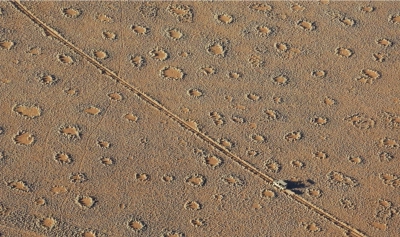
Sursă foto: Thomas Dressler/imageBROKER/Shutterstock
Distribuie articolul


Distribuie articolul


București 16°C
16°C
16°CArticole Similare

3
Turnover in market services provided to population down 18.7% in January compared with December
3

5
Trade of motor vehicles, motorcycles in Romania down 21.4pct in January from December 2025
5

23
Mirabela Gradinaru - meeting with Romanian doctors in the US at roundtable on treating children's addictions
23

15
PSD's Grindeanu says PM accepted solidarity package only after threat to block proceedings in Parliament
15

19
Military drone diverted by Ukrainian air defence systems crashes in Romania, says Ministry of Defence
19

18
New alert issued in Tulcea County against the backdrop of the war in Ukraine
18

14
O expoziţie dedicată casei de modă Schiaparelli se deschide la Londra
14

10
Romania's largest ethnology book collection housed at Antim Ivireanul County Library in Ramnicu Valcea
10

7
Educational Center for Permaculture and Healthy Food inaugurated in Buzau
7

15
'Fostering the Future Together' Summit/ Mirabela Gradinaru, alongside Brigitte Macron and Olena Zelenska
15

7
Greek Ambassador: We support Romania's accession to the OECD
7

5
Bucharest Stock Exchange closes higher Wednesday's trading session with trading exceeding 78.6 million lei (15.4 million euros)
5

7
Football: Radu Dragusin - With Türkiye we must prove that we deserve to go to the World Cup
7














Comentează