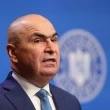
The European Union (EU) has bet on green, but it created the biggest challenge, namely skyrocketing energy prices, Chairman of the Committee on Energy, Energy Infrastructure and Mineral Resources in the Romanian Senate Antal Istvan-Lorant told the forum "Green Gas - a strategic pillar of Romania's energy transition."
"The European Union has bet on green. It said it wants to become that island that will be the cleanest and will give up everything fossil fuel as soon as possible. Romania became a member of the European Union in 2007, on January 1, and regarding pioneering, in 2008 Parliament voted Law 220, that is, the Renewables Law. Everyone wanted to come to Romania to install photovoltaic parks and Romania to get into the spirit of greening up. What did Law 220 mean for 2008? We started with six certificates per megawatt for photovoltaic panels, then there was a huge appetite to come here to Romania, and through various political measures taken by a few agencies overnight, the six certificates were not six certificates, there were four, there were three, and at one point there were moments when it was no longer even profitable to invest in renewables. Likewise, in the spirit of the Green Deal, betting on green, the European Union subsidised the Chinese state with billions of euros by bringing photovoltaic panels into the European Union. This green bet, for the European Union, has practically generated the biggest challenge: the huge high prices of energy. We have a target for biomethane, for example, 35 billion cubic meters by 2030. I, for one, and the political party I represent, have always been in favour of the energy transition," said Antal.
According to the official, the energy transition must be fair, coherent, and logical in order to have fair energy prices.
"What we see at the European Union level is that there are important companies, for example BASF, that leave Europe. The gem of the petrochemical industry leaves Europe, from Germany to China, because of the energy prices. If we look at any global statistic, natural gas consumption increases year after year. That means that, apart from the greenest island, which is not actually the greenest but wanted to become the greenest, everywhere in this world it has been understood that the economy runs on natural gas. As chair of the Energy Committee, I have always tried to strike a balance between exaggerated initiatives that are too green, and other initiatives that don't even want to hear about what green means. Today, after all, we are at an event for green gas. So, we want to be part of that Green Deal, that bet on green, which, after a long time, I think we can conclude has uninspired elements, so to speak. Those parts need to be reconsidered, and I have not yet started to see very clear signals at the European Commission level, such as that we have at least started to recover a bit and understand the phenomenon that, economically and competitively, we need to do something about the energy sector and we need to see how we continue to relate to this Green Deal."
He believes that Romania has the chance to become an important player in the regional energy market and a provider of energy security, especially through the use of natural gas from the Neptun Deep block.
"If we unplug everything, we will no longer have an economy. If we want to tax methane to the detriment of natural gas or to the detriment of those states that have the capacity to produce natural gas, then again, we will plug everything that is industry out of the socket. I believe that Romania, especially from the Neptun Deep perspective, has an extremely important perspective and perhaps has the only chance to truly become an important player in the region and to become a provider of energy security for the entire region," he said.
In his opinion, this potential risks being diminished by European policies of increasing natural gas taxation, which is why he advocated for rethinking the Green Deal and forming alliances at the European level, so that energy transition policies also take into account the interests of industries in the European Union.
"If the European Commission continues to tax this natural gas more and more, then it means that maybe even this company and its representatives will no longer have anything to work on in ten years, because we will no longer be able to consume excessive gas. I, for one, believe we have a major opportunity for Romania to become an important player and, indeed, to make the rules in this market through Neptun Deep and, of course, a rethinking of the Green Deal. I believe the decisions ultimately depend on us the political class, governments, representatives of the Ministry of Foreign Affairs, diplomats who, if they have the power to seek allies, to emphasize their voices in other states, at the level of the European Commission, then, indeed, in a 5-6 year perspective, we can redesign this Green Deal in favour of the European Union and, ultimately, in favour of the industries within the European Union."


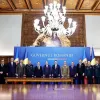
Players from the natural gas industry, relevant authorities, technology providers, financial institutions, and project developers on Tuesday participated in the first edition of the forum "Green Gas - a strategic pillar of Romania's energy transition."
The event is organised by Delgaz Grid, with support from the Romanian Senate's Committee on Energy, Energy Infrastructure and Mineral Resources, in partnership with the publication Financial Intelligence.