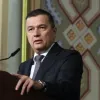
Minister of Health Alexandru Rogobete announced on Wednesday three priority areas for improving care for patients with rare diseases: the development of the National Neonatal Screening Program, the expansion of multidisciplinary teams within integrated diagnostic and treatment centers, and ensuring the continuity of care for pediatric patients as they transition into adulthood.
Present at the event "Memorandum for the Future: People Living with Rare Diseases - A Priority for the Healthcare System," held at the "Carol Davila" University of Medicine and Pharmacy in Bucharest, the Minister emphasized that the signed document represents more than just a formal commitment; in his view, it serves as an initial form of concrete collaboration between the Ministry of Health, universities, patient associations, ARPIM, and healthcare professionals.
"It is more than a Memorandum; it is more than a written commitment. It represents an initial form of concrete collaboration between the central authority the Ministry of Health universities, patient associations, ARPIM, and other healthcare professionals in this field," stated Alexandru Rogobete.
The Minister identified early diagnosis as one of the essential conditions for improving the treatment of rare diseases and highlighted the need to develop the National Neonatal Screening Program, which enables the identification of certain conditions within the very first days of life.
"We can only provide treatment if we diagnose in time," stated Rogobete, explaining that identifying a rare disease as early as possible can offer significant benefits to patients and facilitate treatment.
Another line of action focuses on strengthening multidisciplinary teams within integrated diagnostic and treatment centers. According to the minister, the care of patients with rare diseases requires the collaboration of several specialists, given the complexity of these conditions. In this regard, Rogobete announced that he would initiate discussions with the National Health Insurance House concerning the potential introduction of service packages that would allow for the reimbursement of multidisciplinary care provided in these centers.
"A second objective is for integrated centers for the treatment of patients with rare diseases to expand their multidisciplinary teams because we are not talking about just one doctor here. We are talking about a complex team comprising various specialists from different medical fields. I intend to raise this issue with the National Health Insurance House, where, currently, attention is focused on each specialty individually. I believe that for these complex, integrated diagnostic and treatment centers for rare disease patients, we need service packages that allow for the reimbursement of care provided on a multidisciplinary basis as that is the very nature of these conditions," the minister explained.


The third priority announced by the minister is ensuring the continuity of medical care for pediatric patients with rare diseases who reach adulthood. Rogobete drew attention to the difficulties these patients face during the transition from pediatric medical services to those intended for adults, including the challenge of finding specialists to continue their monitoring and treatment.
The Minister noted that the implementation of the three objectives also requires clarifications regarding the functioning of the healthcare system, but that it can contribute to improving access to services and to better organizing the care of individuals with rare diseases.
"These three objectives which are rather bureaucratic in nature and relate to clarifying how the healthcare system functions with regard to this component can yield significant benefits and help bring balance to the system in this area. I believe that research, innovation, and proper monitoring are our primary objectives for the immediate future, so that we may develop this component as extensively as possible," the Minister of Health further stated.