

Romania faces mounting pressure on financing public spending in the final quarter of the year as the state budget is strained by rising borrowing costs and delays in attracting European funds, while authorities should prioritise collecting revenues already owed to the state, shows an analysis by consultancy company Frames.
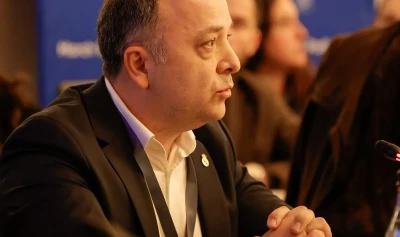
"The question the Government must answer in the coming weeks is very simple: where will the money come from to meet the state's obligations by the end of the year? We are talking about payments to suppliers, transfers to local authorities, co-financing European projects and continuing investments. All of these must be covered without allowing the deficit to spiral out of control," said Frames manager Adrian Negrescu.
Romania's 2026 budget was built on a deficit target of 6.2% of GDP and public investments estimated at RON 163.8 billion, of which around RON 53.4 billion was expected to come from grants and loans under the National Recovery and Resilience Plan (PNRR). Interest expenditure was estimated at RON 60.8 billion, approximately RON 10.3 billion higher than in 2025.
"These figures point to two realities. On the one hand, public investments depend heavily on European funding. On the other, debt servicing is absorbing an ever-larger share of state resources. The problem is that the amounts projected at the beginning of the year are not necessarily cash in the account today. Any delays in project implementation, documentation or the assessment of payment requests force the state to temporarily cover expenses from its own resources or through new borrowing. And borrowing is expensive under current conditions," Negrescu explained.
According to the analysis, Romania had received approximately EUR 13.27 billion under the NRRP by early October, representing around 66% of the revised total allocation of EUR 20.11 billion. On Oct. 9, the country received an additional EUR 300 million from Payment Request No. 3, an amount previously suspended by the European Commission.
"The gap of nearly EUR 6.84 billion does not mean money lost, but neither does it mean money secured. Until the European Commission approves and actually disburses the funds, they cannot be recorded as revenue. It would be a serious mistake to rely on sums that may not arrive in time. If certain milestones are not met, the gap becomes structural and cannot be resolved simply by postponing payments," Negrescu warned.


The analysis argues that budgetary pressures stem from current expenditure, investments dependent on EU funding and rising interest costs. In this context, Frames identifies accelerating European fund absorption, reallocating expenditure and collecting outstanding revenues owed to the state among the key priorities.
"Before looking for new sources of financing, the state should carefully examine sectors operating under special tax regimes and verify whether it is fully collecting the obligations due from them. This is the fastest and fairest source of revenue. It does not place additional burdens on taxpayers who already meet their obligations, but simpaly requires an administration that functions properly," Negrescu said.
One example highlighted by the analysis is the gambling industry, where revenue from slot machine licensing fees fell from RON 485 million in February-May 2025 to RON 300 million during the same period in 2026, a decline of approximately 38%.
"This is a classic case where a regulatory measure produced a negative fiscal effect and nobody appears to have calculated it. As of Sept. 1, only 90 out of roughly 3,100 municipalities had adopted the required decisions. As a result, fully legal, licensed operators were unable to obtain local permits because of administrative delays. The state lost revenue not because companies refused to pay, but because the administration did not allow them to operate," the Frames manager said.
The consultancy also cited a September 2026 analysis estimating cumulative losses of nearly EUR 400 million and a potential annual impact of EUR 530-550 million by early 2027. It stressed that these are estimates and not officially confirmed budgetary losses.
Separately, the Federation of Gambling Organisers (FEDBET) reported that more than 1,300 venues had been closed and around 8,500 jobs affected.
"Even if the exact figures will only become clear after financial statements are completed, the direction is obvious: fewer taxes paid, lower corporate tax revenues, fewer social contributions and employees shifting from taxpayers to social assistance beneficiaries. An industry that contributes roughly EUR 1.3 billion annually to the state budget cannot be treated as a footnote in an emergency ordinance. The impact of Emergency Ordinance No. 7/2026 must be seriously assessed during the budget rectification process," Negrescu said.
According to Frames, the budget revision should start with comparing projected revenues to actual collections and identifying the reasons for any discrepancies. Priorities should include recovering outstanding claims, combating tax evasion, reducing undeclared work and reviewing sectors subject to specific fiscal obligations.
"Romania is simultaneously managing a high deficit, ambitious investments, a strict European timetable and increasingly expensive debt. Under these circumstances, we cannot automatically transfer all risks to taxpayers and businesses. First, we must collect what is already owed through existing fiscal mechanisms and correct measures that have reduced revenues without delivering anything in return," Negrescu concluded.
In his view, the same discipline should be applied to the 2027 budget, which "must be based on real revenues, not attractive figures on paper."