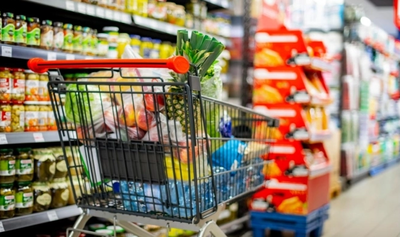


Romania's food and livestock trade deficit decreased by 13.5% in the first seven months of 2026, year-on-year, with exports advancing 8.1%, to about EUR 4.5 billion and imports declining 1.4%, to about EUR 6.7 billion, the Ministry of Agriculture reported on Monday citing data with the National Institute of Statistics (INS).
The Ministry of Agriculture and Rural Development (MADR) considers that these encouraging developments support the continuation of the programmes dedicated to processing and animal husbandry, under which Romania can strengthen its food production and reduce its dependence on imports.
"We have supported investments in processing and animal husbandry so that Romania can better capitalise on what it produces. We need strong farms and factories that process the raw material here, in the country, create jobs and bring more Romanian products to the market. The narrowing in the trade deficit and the increase in exports are encouraging signals, which show us how important it is to continue following this direction. Farmers and processors need predictability, financing and support to carry out their investments. The programmes must be continued, so that the results are consolidated from one year to the next," Agriculture Minister Florin-Ionut Barbu is quoted as saying in a MADR press release.
The most prominent increase in exports was recorded in the dairy and egg category, with an advance of 36.7%, up to EUR 352.9 million. The trade deficit of this category decreased by 24.4%. At the same time, imports of meat and meat preparations decreased by 5.3%.
"To MADR, the development of livestock farms and the expansion of processing facilities are components of the same objective: to increase food production in Romania. Supporting livestock breeders contributes to securing the raw material, and investments in the food industry allow its capitalisation through products of a higher added value. Under the INVESTALIM programme and the interventions for processing in the CAP Strategic Plan 2023-2027, the establishment, expansion and modernisation of units in the food industry are supported, in order to increase the competitiveness of Romanian products on the domestic market and for export," the release reads.
MADR adds that it focuses on the continuation of financing for farmers and processors, with a focus on completing investments and commissioning new production facilities.
"Strengthening the link between farms and processing facilities is essential for capitalising on Romanian agricultural production and reducing, in the long term, trade imbalances in the agri-food sector," they say. AGERPRES