



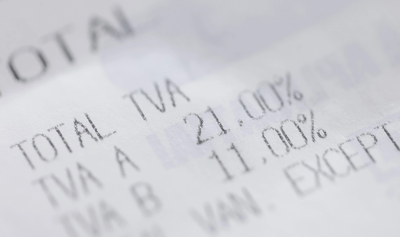


The HoReCa federations and employers' associations have sent an open letter to the Presidential Administration and the Government requesting that the VAT rate be maintained at 11% for food and accommodation.
"Traffic in restaurants and hotels has already been reduced by 50% FPIOR (Federation of Hospitality Industry Employers, n.r.), HORA (Hotel and Restaurant Employers' Organization) and FIHR (Federation of the Hotel Industry), all representative organizations in the hospitality industry, have sent the Presidential Administration and the Government an open letter requesting that the VAT rate be maintained at 11% for food and accommodation. Industry representatives warn that an increase in VAT to 21% will mean bankruptcy in the chain for thousands of businesses, the loss of tens of thousands of jobs, all consequences meaning a reduction in revenues to the state budget. It is a red code for tourism and HoReCa. Under current conditions, such a measure would not only discourage investments, but would also affect Romania's competitiveness in relation to neighboring countries that maintain low VAT rates," it is stated in a joint statement of the three organizations.
In addition, according to them, Romania risks losing competitiveness as a tourist destination in the region.
The three employers' organizations recall that Bulgaria and Hungary practice low VAT rates in hospitality, which makes them more attractive to foreign and regional tourists, along with public policies to support incoming tourism (marketing campaigns, incoming bonuses for each foreign tourist from certain destinations, support for direct airlines, etc.). In the absence of balanced fiscal policies, Romania risks being bypassed as a holiday and business destination, seriously affecting hospitality businesses and the country's tourism trade balance, the sector federations warn.
According to the cited source, the insolvencies in HoReCa increased by 9% in 2024, a trend that also intensified in the first half of 2025.
"It is important to understand the flow of money in the economy, because their circuit in business also applies at the state level. What is happening now is similar to a crisis situation, on the verge of insolvency. What you do when you are in this situation, and here I am speaking from my own experience, is to motivate human resources and optimize production, profits and sales, you do not reduce costs to the threshold of production incapacity. Without productive employees and a good product, you have no sales. Without sales, you have no profit. The same principle applies now, and increasing VAT in HoReCa means the exact opposite of what should be done in a period of crisis - the state cuts off the engine that produces value. Instead of stimulating consumption and supporting the sector to operate at maximum capacity, it pushes it towards insolvency, bankruptcies and layoffs. The real "The solution is not additional taxation, but better collection of existing taxes and the creation of a predictable fiscal framework that encourages investments and honest work," believes FPIOR president Valentin Soneriu, quoted in the press release.
In turn, HORA president Radu Savopol mentioned that people no longer come to restaurants like before, consumption has dropped dramatically, costs have exploded, and many HoReCa representatives are seriously considering whether they can continue.
"If VAT goes up to 21%, not only do we lose tens of thousands of jobs, but we also lose the confidence of entrepreneurs that it is worth investing here. What we are asking for is not an advantage, but a fair chance to survive and grow. Romania needs a healthy hospitality industry, not one driven into bankruptcy. And any decision that can seriously affect a sector cannot be made without a dialogue with those directly involved," Savopol emphasized.
FIHR President Simona Constantinescu believes, in this context, that the true solution does not lie in tax overload, but in courageous and coherent public policies that offer stability, predictability and the chance for sustainable development in the medium and long term.


"Romanian tourism is more than an industry, it is a calling card of the country and a pillar of the economy. It operates in a fragile ecosystem, where any economic-fiscal imbalance or geopolitical instability factor produces chain effects: decreased demand, affecting the destination's reputation, blocking investments, losing jobs and deteriorating Romania's image as a destination," stated Simona Constantinescu.
The federations thus emphasize that maintaining the 11% quota is a balanced compromise, the result of the dialogue between the business environment and the Government, and the only viable solution for ensuring the sustainability of the industry.
The hospitality and tourism industry counts over 35,000 companies, supports over 400,000 direct and indirect jobs and contributes over 5% to GDP.
















Comentează