





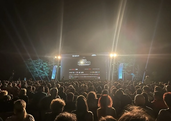
Innovations and investments in the circular economy open new lines of business for Romanian companies, and this will strengthen the competitiveness of the country and the European Union and create new jobs, said AHK Romania president, Andreas Lier, at the opening of the debate "Environment-Climate-Economy. Romania quo vadis?
"Cooperation between the economic, political environment and society is very important. This is the only way to create sustainable solutions and strategies and to give new impulses for Romania's future. Moreover, innovations and investments in the circular economy open new business lines for Romanian companies. This will strengthen the competitiveness of the country and the European Union and create new jobs," said AHK Romania president, Andreas Lier, quoted in a press release of the organization.
Representatives of AHK Romania argue that the air we breathe, the cleanliness of local communities, the transformation of waste into a resource, adaptation to climate change, sustainable construction, eating local products as much as possible are factors that influence the quality of life of people, the environment and the economy.
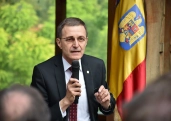
According to the cited source, the transformation of climate challenges into opportunities was also emphasized by Mircea Fechet, minister of Environment, Water and Forests, who noted that the issue of climate change is no longer a philosophical one, but one that affects our lives.
"Europe and Romania have an opportunity related to these developments, because adapting to the effects of climate change is the only thing we can do. Adaptation can mean investments, business opportunities, capital in industry, innovation. As is already the case in Western countries, I believe that the theme of 2025 will be water," emphasized Mircea Fechet.
Buildings and all human activity generate waste, which again affects climate and the quality of life, but can also create economic opportunities. According to the source, one of these is the transformation of waste into resources for other industries, but regulation is needed to differentiate between waste and raw material.
"I would like to see some technical standards for construction and demolition waste and biodegradable waste, defining exactly when waste ceases to be waste. Because only then can you know what recycling is. If there is no definition of recycling, there is no way to measure recycling rates," said Radu Merica, managing director of RER Ecologic Group.
The representatives of AHK Romania maintain that a first step in the direction of assuming responsibility for cleaning up in localities is the guarantee-return system (SGR), which will have been launched for a year soon. It is the largest public-private partnership in Romania so far, having managed to recycle about 80% of the packaging collected after one year.
"SGR does not totally solve the waste problem, but it is a good example for the Romanian society. At the end of my mandate I leave a cleaner Romania, and this is also due to SGR," said Minister Fechet. He also mentioned some business opportunities created by SGR: factories of modular containers for the installation of automatic collection devices, hundreds of new jobs, investments. At the same time, the target is to include other types of packaging such as glass or tetra pak in the future.
The SGR, together with energy efficiency, water recovery or building insulation show that sustainability is profitable, was the opinion of REWE Romania's Managing Director, Daniel Gross. "In most cases, sustainability also brings superior economic profitability. Investments are also needed and this can be partially supported by the state, but I would like for the advantages of sustainability to be promoted more. There is still the idea that if you are sustainable, you are more expensive. This is not the case, we have tried a lot of projects and I can tell you that most of the time the return has been positive," Gross explained.
One of these projects is Triple RO, through which Penny Market tries to buy as much as possible from local producers, in order to offer products that have the main ingredient of Romanian origin. "It's sustainable, because on the one hand it decreases the CO2 footprint, and on the other hand the customer wants Romanian products," he said, adding that investments are needed on the food processing side.
Dialogue is needed to turn all these challenges into opportunities. This was also emphasized by minister Mircea Fechet, who pointed out at the end of the debates that "the economic environment is affected by all the decisions we make at the ministry or at the government".












Comentează