



The excessive increase in the price of electricity, the increase in taxes and duties, the increase in wages unrelated to labor productivity, while the agri-food trade deficit explodes, represent "yet another push given to Romanian agriculture and the economy by those who are leading Romania towards bankruptcy," claims the president of the League of Agricultural Producers' Associations of Romania (LAPAR), Nicu Vasile.
"For years, we have been calling on successive governments at the Victoria Palace to discuss and implement with experts, with agricultural producer associations, a long-, medium- and short-term program that would get Romanian agriculture and the economy out of crisis. Today, subsidies are paid, but the result is zero because no one is interested in seeing what these subsidies produce. Of the 9.7 million hectares, which represent the country's arable territory, 4.7 million hectares are untaxed. The owners of these lands are practically outside the consultancy that they should receive from the MADR, APIA, research institutes, the National Phytosanitary Agency, etc. And then, are we surprised that Romanian agriculture is underperforming, bankrupt?", emphasizes the president of LAPAR in an analysis sent to AGERPRES on Monday.
He adds that the situation is similar in all sectors related to agriculture, from machinery manufacturers to seed producers. "Let's also say that Romania's chemical industry no longer exists. Petrochemicals is in the same situation. In this situation, everything is bought from others, at prices dictated by them. Production goes to the same entities, but, obviously, at prices dictated by them. In this context, we can only conclude that Romanian agriculture has become a captive sector, which depends on others," warns Nicu Vasile.
In his opinion, the excessive increase in electricity tariffs, starting July 1, puts major pressure on agriculture and the food industry, sectors vital to Romania's economic development. In 2024, they recorded a trade deficit of 4.8 billion euros, up 50% compared to 2023 (3.2 billion euros), which shows that production is being carried out at a loss for the state budget, according to the LAPAR analysis.
"While the selling price of agricultural crops has been stagnant for several years, input prices have exploded (seeds, fertilizers, agricultural machinery, labor, etc.). The current government, like the others, does not have a plan to support the agricultural sector, which is coming after several years of drought that caused large losses. Many farmers have sold their farms or have entered insolvency, and many farms are being foreclosed by creditors. There are many people willing to buy agricultural land, especially investment funds, whose sole purpose is to sell it on for a profit and, in no case, to develop businesses in agriculture. Romania risks losing control of over 50% of the country's agricultural area. It is an alarming signal that should give food for thought to those who lead the country today," the LAPAR analysis shows.
Farmers, especially those in fruit, viticulture and vegetable growing, have been seriously affected by the increase in energy prices, using energy-consuming equipment, such as cold storage, sorting lines and greenhouses, which has significantly increased their operational costs.
"The liberalization of energy prices, without support measures for sectors vital to food and national security, has disastrous effects. Perhaps the Bolojan Government, more concerned with the fight against the budget deficit, has forgotten about the National Economy and Agriculture, although this sector can be the engine of Romania's economic development, if the export of profit is stopped and the state budget deficit is reduced by reducing imports of agri-food products," the LAPAR press release also states.
Also, the excessive increase in energy tariffs is driving farmers out of the market, preventing them from storing their crops in silos in anticipation of better prices. The cost of silage, which depends largely on electricity, "is exorbitantly high", so farmers are forced to sell their crops immediately, "right off the field"....
"This year, the Minister of Agriculture boasts a record cereal production, over 14 million tons, the highest in recent years, but that does not mean that Romanian farmers will win. The price of a ton of wheat is reaching historic lows due to the global wheat overproduction. Now the production reports have also come from the northern hemisphere where the harvest has ended, we have overproduction. We also have overproduction in the northern hemisphere, Russia and Germany. Romania is on a positive trend in terms of production, but the costs from the establishment of the crop to the harvest have increased by about 20% in our country, in conditions where production prices have decreased all over the world, including in Europe (...)", according to LAPAR.
The farmers' organization warns that Romania has become dependent on other economies. "Today, Romanian agriculture has become just a sector that ensures social protection for some and constraints for those who want to perform through various environmental schemes received from the EU to be fulfilled," the cited analysis also states.
Regarding profitable exports, LAPAR representatives explain: the state pays subsidies to farmers from European funds and the budget, much lower than in the West and accompanied by numerous unjustified constraints. A large part of the harvest is immediately bought, at derisory prices, by large international traders of cereals and other agricultural products.
"Although Romanian farmers work in broad daylight, with high exposures due to climatic, economic and social factors, the greatest profit is obtained by international traders who control the global trade in cereals. Cereals that return, in large part, to Romania in the form of finished products. We do not have a developed food industry because large interest groups do not want this. Romania must only be a market for food products," added the representatives of the League of Agricultural Producers Associations of Romania (LAPAR).
LAPAR is the national organization that represents the interests of Romanian farmers, bringing together agricultural associations and cooperatives to support the sustainable development of agriculture and protect local producers.
LAPAR: Romanian agriculture, under pressure from costs and imports
Autor: Cătălin Lupășteanu
Publicat: 08-09-2025
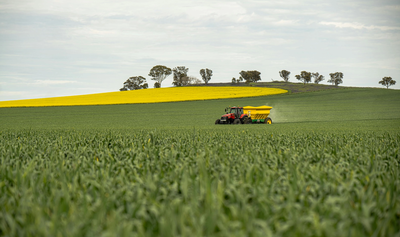
Sursă foto: pexels.com
Distribuie articolul


Distribuie articolul


București 6°C
6°C
6°CArticole Similare

9
Military drone diverted by Ukrainian air defence systems crashes in Romania, says Ministry of Defence
9

9
New alert issued in Tulcea County against the backdrop of the war in Ukraine
9

14
O expoziţie dedicată casei de modă Schiaparelli se deschide la Londra
14

10
Romania's largest ethnology book collection housed at Antim Ivireanul County Library in Ramnicu Valcea
10

6
Educational Center for Permaculture and Healthy Food inaugurated in Buzau
6

14
'Fostering the Future Together' Summit/ Mirabela Gradinaru, alongside Brigitte Macron and Olena Zelenska
14

7
Greek Ambassador: We support Romania's accession to the OECD
7

5
Bucharest Stock Exchange closes higher Wednesday's trading session with trading exceeding 78.6 million lei (15.4 million euros)
5

7
Football: Radu Dragusin - With Türkiye we must prove that we deserve to go to the World Cup
7

11
Predoiu:Respect to all women and men who wear this uniform with dignity and courage
11

11
CONAF president attends 'Women of Influence' Gala in Chicago
11

14
First TRAXX MS3 electric locomotive of 16 to reach Romania in early April
14

6
UDMR leader: Investments in nurseries, kindergartens, schools, sports facilities needed to address demographic problem
6














Comentează