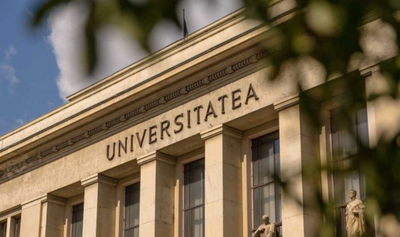


The University of Bucharest organises, Wednesday to Saturday, the most important professional forum dedicated to historical research in Romania - the National Congress of Romanian Historians, fifth edition, with the theme "The Historiography of the 21st Century: Developments, Challenges and Opportunities".
The event is organised by the Faculty of History of the University of Bucharest, under the aegis of the Romanian Academy and the National Committee of Romania's Historians, with support from the Ministry of Education and Research, and it is affiliated to the International Committee of Historical Sciences - ICHS.
The congress brings together historians and researchers from Romania, Moldova and abroad in Bucharest for four days of roundtable conferences, panels and a session dedicated to the presentation of posters.
The event takes place in Romanian, at the headquarters of the Faculty of History of the University of Bucharest.
The conference starts today at 10:00hs, in the auditorium of the Faculty of Law of the UB.
The event will be attended by rector of the University of Bucharest Marian Preda, representatives of the Presidential Administration, the Ministry of Education and Research and the Romanian Academy. Among the guests are Mihai Dimian, acting minister of education and research, Sorin Costreie, presidential adviser on education and research and coordinator of the CIVIS Alliance at UB, Wilhelm Danca, deputy chair of the Romanian Academy, and Ioan-Aurel Pop, a member of the Romanian Academy.
It aims to reaffirm the role of history as an essential exercise of critical thinking, capable of providing adequate landmarks for understanding the present and anticipating the future.
For four days, participants will address various topics, including digital history and new methodological tools applied to analytical research, the recent past and memory of the communist regime, cultural diplomacy and international identity, economic and social history and gender studies, methodological pluralism and interdisciplinarity, through academic debates that connect history with political science, sociology, international affairs, literary studies and art history.