





An interview by Dr. Adrian Leonard Mociulschi
The promise of digital automation extends far beyond efficiency. As smart contracts and artificial intelligence move from the margins of innovation into the architecture of everyday life, they challenge long-held assumptions about trust, responsibility and legal accountability.
In this interview, Romanian prosecutor and legal scholar Victor Marcusohn reflects on the future of contracts, the limits of algorithmic decision-making and the enduring role of human judgment in the law.
Adrian Leonard Mociulschi: Professor Marcusohn, thank you for being with us today.
Smart contracts enable the automatic execution of obligations through computer code. Do they represent merely a technological evolution of existing legal instruments, or do they compel us to reconsider fundamental concepts such as consent, contractual performance, and contractual trust?
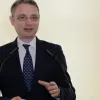
Dr. Victor Marcusohn: For the moment, I think it is important to approach this topic with a degree of caution. Smart contracts are certainly one of the most interesting applications of blockchain technology. Despite the label, however, they are not a form of Artificial Intelligence. At their core, they are software programs designed to execute specific obligations automatically once certain conditions have been met.
At least for now, I would see them as an evolution of existing commercial tools rather than a fundamental break with traditional legal principles. They do raise important questions about how contracts are formed, how consent is expressed, how contractual terms should be interpreted, and what happens when a programming error occurs. But many of these questions can still be addressed using legal concepts that already exist within civil law.
I would add one important point here. The digitalisation of law does not necessarily mean the creation of an entirely new branch of law. Nor can traditional legal rules simply be transferred, unchanged, into the digital world. More and more of our social and economic relationships now exist in both physical and digital forms, and the law must be able to respond to that reality.
In my view, the primary role of law is to provide a framework that allows people to use new technologies with confidence. That is why I regard the European Union's AI Act as an important step forward. It adopts a risk-based approach, placing stricter requirements on systems considered high-risk, including some used in the administration of justice, while also introducing transparency obligations for technologies such as chatbots.

Whether this regulatory framework will ultimately prove successful remains to be seen. Technology is evolving rapidly, and the law will always face the challenge of keeping pace. But I believe the overall direction is the right one.
In the short to medium term, I believe the law remains well equipped to deal with smart contracts and other blockchain-based applications. The task for legislators is to monitor technological change carefully and to ensure that the legal framework evolves whenever new developments fall outside the reach of existing rules.
Adrian Leonard Mociulschi: Looking ahead, what do you think the contract of the future will look like?
Could smart contracts eventually become the dominant model in the digital economy, or will technology and traditional legal interpretation continue to coexist in hybrid forms?
Dr. Victor Marcusohn: I think it is important to distinguish between what a contract is and how it is carried out. Blockchain technology and smart contracts may change the way obligations are performed, sometimes quite dramatically. But the core elements of any contract, such as consent, legal capacity, and the rights and obligations of the parties, remain legal questions. In that sense, I do not see a completely new theory of contract law emerging. Rather, I see existing legal mechanisms being adapted to new technological realities.
That said, I would not rule out the possibility that smart contracts could become the dominant model in certain areas of the digital economy. This is especially true where obligations are clear, standardized, and can be translated easily into code. In those cases, the benefits are obvious: transactions can be faster, costs can be lower, and fewer intermediaries may be required.
At the same time, we need to be realistic about the limits of technology. Legal relationships cannot always be reduced to a series of standardized operations. Many contracts require interpretation, adaptation to unexpected circumstances, assessments of good faith, or a careful balancing of competing interests. Those are not always questions that can be translated neatly into computer code.
For that reason, I believe a hybrid model is the more likely outcome. We may see certain contractual provisions executed automatically through code, while matters involving interpretation, evaluation, or the resolution of disputes remain firmly in the hands of lawyers, judges, and the parties themselves. Technology can streamline performance, but it cannot remove the need for legal judgment.
In the long run, the success of smart contracts will depend not only on the technology itself but also on the degree of trust that the legal framework is able to provide. Efficiency matters, of course, but in law it cannot come at the expense of legal certainty or the protection of rights. For that reason, I do not see technology replacing legal judgment. I see the future as one of coexistence, where technological innovation and human judgment continue to work side by side.
Adrian Leonard Mociulschi: As we reach the end of our discussion, let me ask one final question. Artificial Intelligence is becoming increasingly embedded in everyday life, and more and more decisions are likely to be automated.
From a legal perspective, is there a point beyond which judgment and responsibility simply cannot be delegated to algorithms?
Dr. Victor Marcusohn: I think that is precisely the question we need to be asking today. Technology will increasingly take over tasks that can be standardized, whether we are talking about legal research, document drafting, the automated execution of obligations, or even certain organizational functions. In that sense, Artificial Intelligence is likely to change the way many institutions and professions operate.
What I do not believe, however, is that it can eliminate the need for human judgment. Law is not simply about applying rules. It is also about responsibility, legitimacy, and accountability. An algorithm can follow instructions, but it cannot bear responsibility for a mistake. After all, you cannot sue an algorithm, nor can you hold it accountable for the consequences of a decision.
This becomes particularly clear in the administration of justice. The right to a fair trial requires an independent and impartial tribunal, and people have the right to understand why a case has been decided in their favour or against them. Artificial Intelligence can assist with research, analysis, and information processing, but it cannot replace the person who ultimately exercises judgment, nor can it assume responsibility for the outcome.
Technology may transform the tools we use. Responsibility, however, remains fundamentally human.
Adrian Leonard Mociulschi: Professor, thank you for joining us and for sharing your insights on a subject that sits at the intersection of law and emerging technologies. I am sure our readers at ȘTIRIPESURSE.RO will find your reflections valuable as blockchain, smart contracts, and Artificial Intelligence continue to reshape the legal landscape.
Beyond the Algorithm
Perhaps, one day, contracts will exist entirely on blockchain networks, while digital assets are represented through NFTs, unique digital certificates of ownership and authenticity recorded on a blockchain. Until then, however, as Victor Marcusohn emphasizes, technology may automate the execution of obligations, but legal responsibility ultimately remains human. What a fully digital legal ecosystem might look like remains an open question, and perhaps the subject of a future conversation.
An interview conducted by Dr. Adrian Leonard Mociulschi
























Comentează