





Archaeologists in Alba Iulia have discovered the main gate of the Roman fortress at Apulum, the Porta praetoria, on the eastern side, during extensive excavations carried out at the Capistrano Bastion, four decades after the southern gate was identified.
'Forty years after the southern gate was identified, a new gate has been discovered on the eastern side, as part of the systematic archaeological research at the Capistrano Bastion. Through the Porta praetoria, Via praetoria led to the headquarters building (principia) of the fortress of the XIII Gemina Legion. The massive foundation platform of one of the towers, discovered at a depth of four metres, provides us with important information about the dimensions and layout of the Roman gate,' archaeologist Anca Timofan, who is coordinating the research, explained on Tuesday.
Thus, knowing the architecture of the Porta principalis dextra, discovered in 1986 and partially restored and reconstructed, archaeologists can recreate the appearance of this monumental entrance, with two imposing rectangular towers, a central wall and two access arches, built using the opus quadratum technique from large, dressed limestone blocks.
'Our research has confirmed that the foundations of the Roman gate were reused and incorporated into the structure of the medieval St George's Gate,' Anca Timofan wrote on Facebook.
She noted that this overlap is all the more remarkable because the Roman origin of the medieval gate had already been mentioned in accounts by foreign travellers in the 17th century.
'Chronicler Wolfgang Bethlen described the fortress as follows: ...it has two twin gates, one to the east, facing the Mures and Ampoi rivers, called St George's Gate, reinforced with a barbican. Above this gate was an image of Romulus and Remus being suckled by the she-wolf, probably a Roman relic.' Today, we can verify in the field the connection between the Roman and medieval gates - two monumental structures from different periods, built at the same strategic point,' Anca Timofan said.
Archaeologists in Alba Iulia resumed systematic research this month in the area where, last year, the basement level of the medieval gate tower through which Michael the Brave entered the fortress of Balgrad in 1599 was identified.
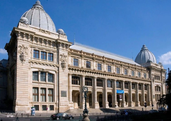
The systematic archaeological research is being carried out by the National Museum of the Union Alba Iulia, with the support of the Alba County Council.
In September 2025, the team coordinated by Anca Timofan carried out systematic research at the Capistrano Bastion, leading to an exceptional discovery in the eastern part of the fortress: the ruins of the medieval St George's Gate, built over the main gate (Porta Praetoria) of the fortress of the XIII Gemina Legion.


The three archaeological sections opened at the bastion revealed structures dating from the Roman period (the fortress of the XIII Gemina Legion, 2nd-3rd centuries AD), the Early Medieval period (9th-12th centuries), the Principality of Transylvania (16th-17th centuries) and the Habsburg period (18th-19th centuries).
























Comentează