




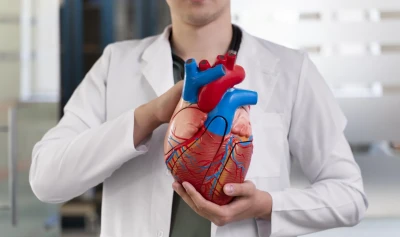


The Coalition of Organisations of Patients with Chronic Diseases (COPAC) and the Carol Davila University of Medicine and Pharmacy in Bucharest, through its Centre for Innovation and e-Health, announced on Tuesday the launch of the "Heart Lab - a cardio-renal-metabolic prevention project in the community," against the backdrop of cardiovascular diseases remaining the leading cause of death in Romania and many of them being preventable or detectable at an early stage.
According to a press release from COPAC, the project is aimed primarily at adults over the age of 35 and those who already have cardiovascular risk factors, agerpres reports.
Participants will learn how to measure their blood pressure and pulse correctly, how to better understand cardio-renal-metabolic risk factors, how to use a personal health journal and digital monitoring tools and how to access consultations and investigations available through prevention packages.
Community nurses will play a central role in the project. They will be trained to become multipliers of these interventions and to support education, prevention and monitoring for people directly in the communities where they work.
The interventions will target Bucharest and the surrounding counties, with activities focused particularly on Calarasi, Ialomita, Buzau and Giurgiu.
Over the 12-month period, the project will include 10 community interventions in pharmacies, where members of the public will be able to have their blood pressure measured and undergo ECG testing, risk assessment and prevention education, as well as four practical educational sessions for the public and four training programmes for community nurses.
According to the same source, the project will also develop the Personal Cardio-Metabolic Journal, a tool designed in a simple and accessible format, including for people with limited health literacy. The journal will be available in both printed and digital formats, with approximately 2,000 copies due to be distributed, together with educational materials and infographics dedicated to prevention.
The project also includes a digital health component, through a pilot programme involving approximately 100 people and using the Cardionline app and wearable devices for structured self-monitoring, education and the generation of real-world monitoring reports. The digital component will be coordinated through the Carol Davila University of Medicine and Pharmacy and will benefit from complementary sources of funding.


In addition, approximately 20 health journalists will take part in a programme aimed at improving public communication on prevention, early diagnosis and cardio-renal-metabolic monitoring.
"Prevention must not remain merely a message that we convey to people, but must become a behaviour that they can integrate into their daily lives. Through the 'Heart Lab,' we want to bring prevention closer to the community (...)," said Viorel Jinga, rector of the Carol Davila University of Medicine and Pharmacy, as quoted in the press release.
"With the 'Heart Lab,' we are continuing prevention activities in communities by providing information, risk assessment tools, monitoring certain parameters such as blood pressure and pulse and connecting people through the app where necessary. Community nurses are people whom communities trust - we want to support them in becoming the driving force behind this change," said Luminita Valcea, executive director of COPAC.
In addition to COPAC and the Carol Davila University of Medicine and Pharmacy, partner pharmacies, local authorities, community centres, family medicine practices and community nurses will be involved in the project, alongside doctors, health educators and volunteer students. Over the 12 months, the project will test an integrated model of cardiovascular education which, based on the results, could be replicated regionally and nationally




























Comentează