



The Concordia Employers' Confederation criticizes the government's decision to maintain the minimum turnover tax in the second fiscal package it is about the pledge responsibility for, while also introducing a new tax on intra-group expenses, stating that this doubles the tax burden on the same companies, discourages investments and reduces competitiveness.
"The minimum turnover tax was a fiscal policy error right from the beginning, and keeping it in place simultaneously with a new tax means doubling the burden on the same companies and compromising the chances of economic recovery. A weakened economic climate will not bring more revenue to the budget, but less. The business environment and citizens can no longer bear the burden of the budgetary imbalances generated by the political class. Romania needs real reforms, streamlining public spending and a fair assignment of responsibilities. Concordia is calling on the authorities to clarify their position: we want structural reforms that start with streamlining state spending, not fiscal ping-pong that will transform the business environment into the ATM of the political class," the employers' associations argue, agerpres reports.
In its turn, the Employers' Association of the Software and Services Industry - ANIS warns that internationally non-aligned tax restrictions and measures, including the maintenance of the minimum turnover tax and the limitation of deductions for intra-group expenses, will seriously affect the competitiveness of the IT industry.
Large Romanian companies and IT multinationals risk losing ground on the global market, while startups are particularly vulnerable, as the new provisions would block essential financing mechanisms (such as CLA loans), the Association cautioned through the voice of its president, Edward Cretescu.
The experts of the IT industry's umbrella organization believe that limiting financing through contractually negotiated protection mechanisms would discourage the involvement of investment funds and business angels in supporting the local ecosystem, as the Romanian legislation does not offer modern mechanisms used in other states, such as multiple share classes.
Also, changing the regime applicable to expense deductions exclusively in relations with affiliated entities is problematic in the absence of a solid economic or legal foundation, and without clarity in relation to the effective application.
Such an approach reduces the attractiveness of the business environment, ushers in fiscal unpredictability and runs counter to the objectives of an open, competitive and sustainable growth-oriented economy, ANIS said.
Employers' organisations extremely unhappy with Govt's second fiscal package - minimum turnover tax in particular
Autor: Alecsandru Ionescu
Publicat: 01-09-2025
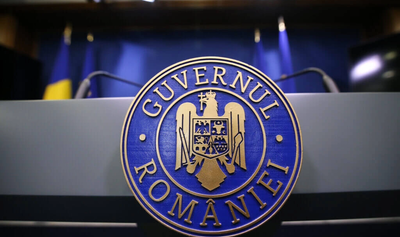
Sursă foto: MSNews
Distribuie articolul


Distribuie articolul

Explorează subiectul

București 16°C
16°C
16°CArticole Similare

2
Trade of motor vehicles, motorcycles in Romania down 21.4pct in January from December 2025
2

17
Mirabela Gradinaru - meeting with Romanian doctors in the US at roundtable on treating children's addictions
17

15
PSD's Grindeanu says PM accepted solidarity package only after threat to block proceedings in Parliament
15

19
Military drone diverted by Ukrainian air defence systems crashes in Romania, says Ministry of Defence
19

18
New alert issued in Tulcea County against the backdrop of the war in Ukraine
18

14
O expoziţie dedicată casei de modă Schiaparelli se deschide la Londra
14

10
Romania's largest ethnology book collection housed at Antim Ivireanul County Library in Ramnicu Valcea
10

7
Educational Center for Permaculture and Healthy Food inaugurated in Buzau
7

15
'Fostering the Future Together' Summit/ Mirabela Gradinaru, alongside Brigitte Macron and Olena Zelenska
15
7
Greek Ambassador: We support Romania's accession to the OECD
7
5
Bucharest Stock Exchange closes higher Wednesday's trading session with trading exceeding 78.6 million lei (15.4 million euros)
5

7
Football: Radu Dragusin - With Türkiye we must prove that we deserve to go to the World Cup
7

11
Predoiu:Respect to all women and men who wear this uniform with dignity and courage
11













Comentează