



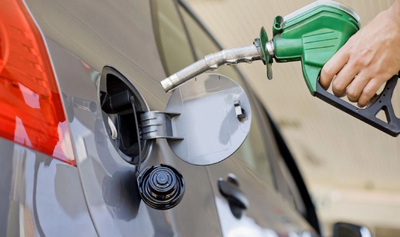


An emergency ordinance on declaring a state of crisis on the crude oil and/or petroleum products market - petrol and diesel - and on introducing measures to protect the economy and the population during the crisis period, as well as modifying Emergency Ordinance No. 12/2026 concerning measures applicable to household consumers on the natural gas market between 1 April 2026 and 31 March 2027, was published on Thursday evening in the Official Journal.
The Government approved the emergency ordinance on Thursday, which establishes measures to protect the economy and the population during the crisis period.
'A state of crisis is hereby declared on the crude oil and/or petroleum products market until 30 June 2026 inclusive. The duration of the crisis may be extended successively for periods of up to three months, as long as the circumstances that led to the crisis persist, through legislative acts issued by the Parliament or the Government of Romania. The termination of the crisis and of the protection measures may be decided before the expiry of the set deadline,' the ordinance states.
According to the same source, measures will be introduced to cap the commercial mark-up applied by economic operators that produce, import, distribute and/or sell petrol and diesel at the average level of the mark-up applied by each operator in 2025, with exports and intra-Community supplies exempted.
If mark-ups exceeding the limits set out in the ordinance are identified, fines ranging from 0.5% to 1% of the turnover recorded in the year prior to the sanction will be imposed.
At the same time, the ordinance introduces the possibility for economic operators to reduce the biofuel content in the volumes of petrol placed on the market from 8% to a minimum of 2% during the period in which the protection measures apply.
Furthermore, in order to ensure domestic consumption needs are met, exports of diesel and crude oil will only be permitted after obtaining approval from the ministry responsible for the economic sector and the relevant line ministry.


More specifically, during the state of crisis, the conclusion and/or execution of export contracts and/or intra-Community supply contracts for diesel and crude oil may only be carried out by economic operators with prior written approval issued by the Ministry of Economy, Digitalisation, Entrepreneurship and Tourism and the Ministry of Energy.
The requirement to obtain prior approval for exports or intra-Community sales of diesel and crude oil is driven by the existence of a structural imbalance on the national petroleum products market, characterised by a surplus of petrol and a shortage of diesel. This condition will subsequently be regulated through a procedure for issuing such approvals by order of the Minister of Economy, Digitalisation, Entrepreneurship and Tourism and the Minister of Energy, the Government specifies.
Sanctions are also introduced, whereby 'exports carried out without the necessary approvals will be subject to fines ranging from 5% to 10% of turnover, as well as the complementary measure of confiscation of goods intended for, used in, or resulting from the offences.'
The ordinance also includes amendments concerning the natural gas market, aimed at 'eliminating legal ambiguities and the risk of inconsistent interpretation, ensuring a proper delineation of the responsibilities of public institutions, avoiding dysfunctions in the implementation of the natural gas allocation mechanism, preventing imbalances between market participants, and reducing the risk of litigation generated by unclear legal provisions.'
The main amendments regarding natural gas include: the establishment of a clear mechanism for the proportional allocation of available quantities based on the estimated consumption of each supplier's customers; the introduction of detailed provisions on the breakdown of quantities by consumption categories; and the setting of explicit calculation rules, including the determination of minimum stocks, the calculation of differences between estimated consumption and allocated quantities, and the recalculation of quantities according to consumption trends.
Other amendments concern the regulation of a mechanism for periodic recalculation and adjustment based on data submitted by market operators, as well as the introduction of obligations regarding the submission and updating of data between producers, suppliers and the competent authorities.


























Comentează