



The government is concerned about the problems in the Jiu Valley and is looking to find the best solutions so that the region has a future, said Prime Minister Ludovic Orban.
"I wanted to be present today, August 6, an extremely important day for the Jiu Valley and for all those who earn their living from mining. I would like my presence here to represent a clear message that the Romanian Government is concerned about the problems in the Jiu Valley and seeks to find the best solutions, so that the Jiu Valley has a future, the Jiu Valley can overcome all the complicated situations it has experienced lately and, especially, the risks concerning the future," said Ludovic Orban, on Thursday, at the wreath-laying ceremony at the Statue of the Miner in "Carol Schreter" Central Park in Petrosani.
The prime minister added that the situation in the Jiu Valley must be viewed with realism.
"Hunedoara Energy Company has seen two state aids that were granted under certain conditions, of which one state aid must be returned, following the decision of the European Commission, because it was not granted in accordance with the law, and the second state aid, granted for the closure of the Lupeni and Lonea mines, the state aid was granted for the closure of the mines until December 31, 2018 and the mines continue to operate. I have talked to the miners' authorized representatives, with the leaders of the Mountain Trade Union and the representative leaders for each of the 4 mines with whom I have tried to find solutions so that the company's activity can continue and jobs are not affected. We have identified solutions that we have obviously established, that need an agreement at the level of the European Commission and that we want to implement. We need a company that is no longer burdened by historical debts and that includes all the assets that are profitable and have the capacity to operate efficiently, and we want to do that," Orban said.
The head of the Executive pointed out that it is necessary to find solutions for the inclusion of the two mines (Lupeni and Lonea -ed.n.) that "others wanted to close".
"We do not want to close them. There is a study carried out with the agreement of the European Commission by a team of Polish specialists who give the technical solution for the two mines to continue their activity that we support and want to implement," said Orban.
He recalled that the Government he leads has already adopted a series of support measures, mentioning the emergency ordinances approved for the payment of severance payments in the case of those who were made redundant in the Jiu Valley.
"We are paying close attention to everything that is happening in the Jiu Valley in order to be able to find the best government decisions to support you (...) We care and we will adopt all the solutions that we can adopt in the context of European legislation and based on the economic history that exists here in the Jiu Valley," Orban said.
At the same time, the prime minister stressed that the Jiu Valley must "open up towards the exterior", referring to the zonal road infrastructure projects that must be continued, mentioning, among others, DN 66 A, which must connect the Jiu Valley with DN 6 through Herculane, and the road to Voineasa which connects with Transalpina and DN 7 on the Olt Valley.
"It is fundamental that in the next 10 years, given that we have a 10-year window of opportunity that the Green Deal gives us, we really succeed in creating an economic dynamic. Anyone who wants to do business in the Jiu Valley in a profitable field should be supported (...), any investor who wants to come to invest in the Jiu Valley should receive a set of advantages so that they can invest and create jobs in productive capacities, so that , in time, there is a secure future for the Jiu Valley," said Orban.
Orban called on the local administrations in the area to unite in the "ITI" (Integrated Territorial Investment - ed.n.) format, specifying that the Government supports such an approach which will be adopted by a law and supported at the level of the European Commission.
"What does ITI mean? It means that the administrations unite and can generate, in consultation with the citizens of the localities of the Jiu Valley, projects that obtain direct funding from the European Union, without having to go through the bureaucracy in Bucharest," Orban went on to say.
Orban: Government, concerned about problems in Jiu Valley, seeks to find solutions for region's future
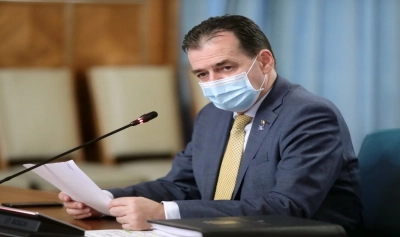
Sursă foto: gov.ro
Distribuie articolul


Distribuie articolul


București 6°C
6°C
6°CArticole Similare

14
President Basescu: Trump - Putin tandem defeated to a pulp by Hungarian people
14
21
Speaker Grindeanu reacts to Peter Magyar's win, expects joint projects to be strengthened, new ones developed
21
19
Nuclearelectrica puts out to tender feasibility study to double CANDU-6 nuclear fuel assembly production capacity
19

20
Health Minister Alexandru Rogobete to meet in Washington with World Bank and Pfizer representatives
20

17
Prime Minister Bolojan hails Peter Magyar's victory, wishes him a successful mandate
17
17
President Nicusor Dan takes to X to congratulate Hungary's Peter Magyar on his legislative election win
17

33
Archpriest Zaharia Peres: Easter Radiance breaks the darkness and restores eternal Light
33

28
Romania secures 2 - 0 win over Georgia in Billie Jean King Cup play-off
28
30
Cardinal Claudiu in Easter Pastoral Letter:Church teaches the power of light cannot be wiped out by darkness
30

21
Patriarch Daniel's Easter message calls for peace, compassion and good deeds
21
16
Cotroceni Palace to host Bucharest Nine and Nordic Summit on May 13
16
26
Foraj Sonde Videle acquires Raffles Energy and Zenith Resources; deal expected to close by end-August
26
27
Football icon Mircea Lucescu laid to rest with military honors
27













Comentează