



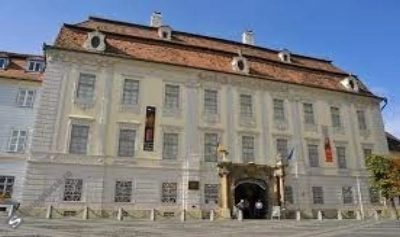


Hundreds of visitors stepped through the gates of Brukenthal Palace in Sibiu's Great Square on Wednesday, with free entry marking 209 years since the opening of the oldest museum in Romania and in South-East Europe - the National Brukenthal Museum.
'On this day 209 years ago, the ceremony held in the hall of the Evangelical Gymnasium was marked by the message of the chief priest Johann Filtsch, an appeal to cultivate moral and spiritual values that guide behaviour and the meaning of life, shape character and foster harmonious coexistence, reflected equally in education and culture, in the hope that the museum to which the founder offered his spacious palace as its temple may serve the homeland and rise towards perfection (...) Regardless of the national and religious barriers between the inhabitants of this town and this homeland, visiting the museum should be a joyful occasion for people of genuine moral and spiritual worth to know and respect one another',' reads a message published on Facebook by the museum's representatives, agerpres reports.
Brukenthal remains, even after 209 years, 'the museum with the most diverse collections in Romania. Visitors can discover everything from European and Romanian art to archaeology, numismatics, mineralogy, cartography, the history of pharmacy and palaeontology, all housed in nine buildings whose history dates back to the 13th century,' museum manager and historian Raluca Teodorescu told AGERPRES.
Founded on the legacy of the former Saxon governor of Transylvania, Samuel von Brukenthal, who left his entire fortune to the Evangelical Church in Romania on condition that the museum remain public and open to visitors, the National Brukenthal Museum houses unique pieces that can be admired only in Sibiu.
Despite the competing attractions of social media and artificial intelligence, the museum continues to draw hundreds of thousands of visitors from around the world each year. It has also embraced these modern tools, promoting its collections online and even using artificial intelligence to present its paintings in innovative and far more dynamic ways.
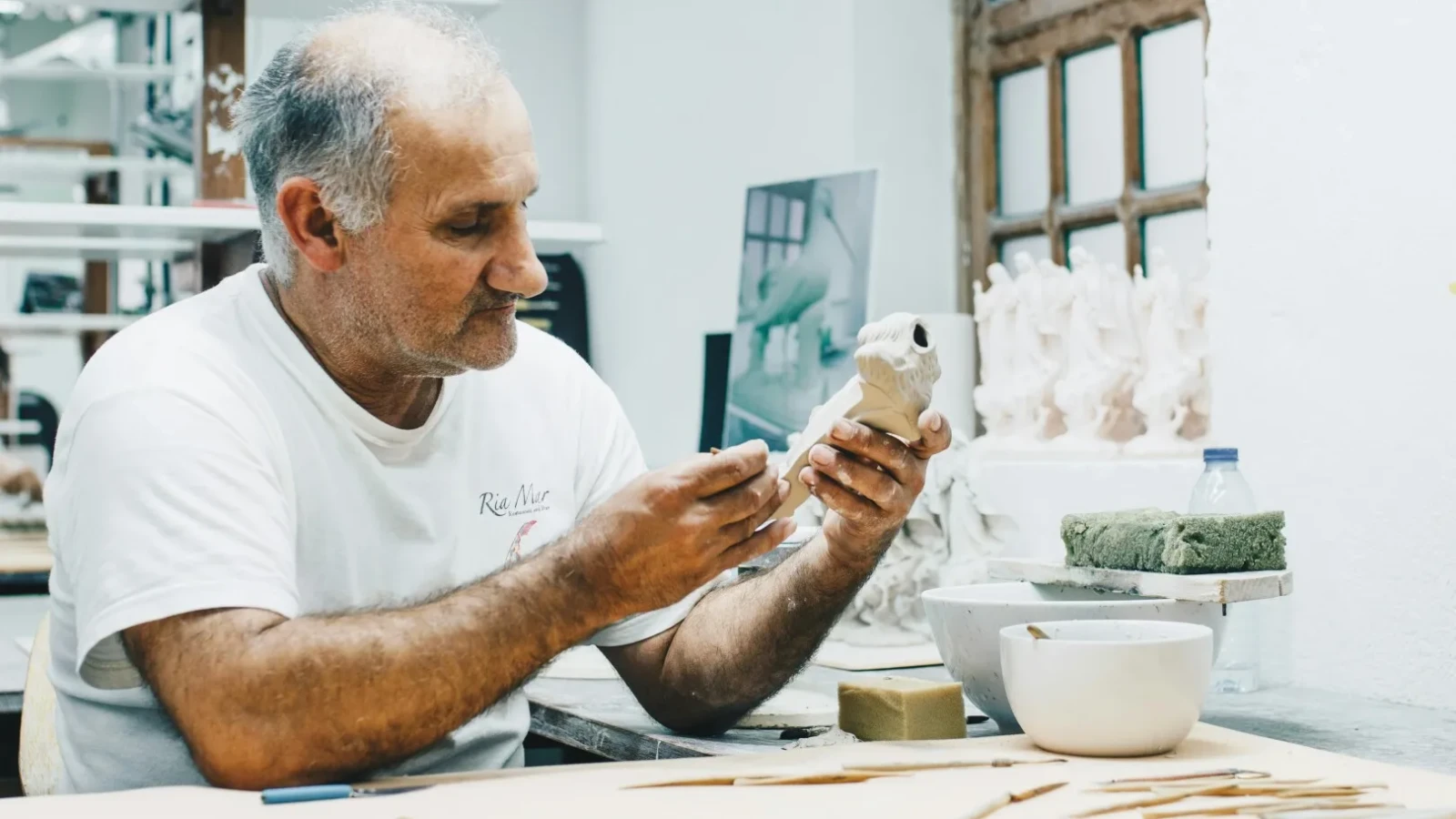

'In 2025 we recorded a 26 percent increase in ticket revenue, and in the coming period we are preparing interesting projects based on modern technologies, with the direct involvement of our visitors in the viewing experience. Today, technology allows us to bring art closer to each of us, but the essence remains the same: to spark curiosity, to learn from the past and to enjoy together the beauty of creation,' Teodorescu added.
Spanning more than two centuries, the museum's history is enriched by a number of little-known stories that remain unfamiliar to the wider public.
Built in refined Viennese style over the course of a decade, the palace is one of the few urban baroque residences in Europe without surrounding gardens, rising directly from the historic centre of the city. Its founder, Samuel von Brukenthal (1721-1803), governor of Transylvania under Empress Maria Theresa, assembled during his years in Vienna one of the most valuable private art collections of the eighteenth century. When he opened the upper floor of his residence to visitors, it displayed 18 rooms and around 800 paintings; by the time of his death, the collection had grown to 1,200 works.
Visitors to the National Brukenthal Museum can see here what is believed to be the only original wallpaper still preserved on the walls of a European palace.
'For example, the wallpaper we see in certain rooms, although once found in other palaces as well, no longer exists elsewhere in Europe in its original form. It was removed for conservation. We are proud that ours has survived and has been very well preserved,' museum curator Alexandra Poponea underlined.
According to records from the period, after 1700 Brukenthal was regarded as one of the three most important art collectors in Europe.
'Brukenthal collected art, books, minerals, weapons, coins and more. He was a complex man, with wide-ranging interests, which is why he invested considerable sums in his palace,' museum curator Alexandra Poponea remarked.
Another lesser-known detail is that when Samuel von Brukenthal returned to Sibiu after completing his studies abroad, he was not immediately accepted among the city's elite a position he consolidated through his marriage to Sophia, the mayor's daughter. Personal tragedy soon followed: their only child died at the age of four. With no heirs and later widowed, Brukenthal decided that his collections should pass not to a family line, but to the public.
In the year of his daughter's death, he travelled to Vienna, met Empress Maria Theresa and began the career that would elevate him to Court Chancellor of Transylvania. It was in Vienna that he assembled the remarkable art collection that still defines the museum today. Inside the palace, visitors encounter not only masterpieces, but also the intimate traces of eighteenth-century life family portraits painted decades after loss, rare Anatolian carpets, and the refined salons where hot chocolate was once served for the first time on this territory.
Another curious detail is that hot chocolate was first served on what is now Romanian territory in the ladies' salon of Brukenthal Palace. The palace also houses some of the rarest Anatolian carpets in Romania, examples now found only in Brasov.
Visitors can also see what eighteenth-century bathrooms looked like rooms without drainage, where water was poured into large vessels for washing.
Among the period furnishings is a cabinet whose doors are inlaid with tortoiseshell. Equally intriguing is an early ancestor of the modern desk. Rather than being used seated, it was often used while standing, and most remarkably it contained a hidden 'secretaire' a concealed safe-like compartment that could be opened only if one knew precisely where to tap the wood, a precaution designed to keep servants from accessing its contents.
An ancestor of the modern iron can be seen placed on one of the beds displayed in Brukenthal Palace, where visitors may also glimpse what kitchens of the period looked like, not only the refined salons. This early device was used to warm bed linen, performing a function similar to that of an electric blanket today.
Those who explore the paintings in every room will also encounter what might be called the baron's 'calling cards' works of art that reflected his status and connections, including imperial portraits.
Among Brukenthal's personal belongings, one of his original clocks has been preserved. Though it no longer functions, it once operated with a double mechanism: one for telling the time and another serving as a musical box.
History enthusiasts can visit the gentlemen's salon of the palace, the setting where some of the most important political decisions of the time were taken. It was also here that the finest cognac was enjoyed and the most expensive cigars of the region were smoked.
Brukenthal himself appears in several portraits displayed in the palace. In one of them, the baron is depicted at the moment of his retirement.
Naturally, the most valuable works are the masterpieces of the Brukenthal collection, foremost among them 'Man with a Blue Chaperon' by Jan van Eyck. The artist painted only a small number of portraits around twenty survive worldwide including the one in Sibiu. At the time it was created, the ultramarine blue used in the painting was more expensive than gold by weight.
Through other paintings, visitors also discover some of the plants introduced to Sibiu by Baron Brukenthal, including the potato, pineapple, orange and lemon, which he first cultivated at his estate in Avrig.
Before leaving Brukenthal Palace, visitors are encouraged to step into the so-called 'Cabinet of Curiosities.' The highlight of this room is the skull of an elephant that once lived at the Sibiu Zoo, the oldest zoo in Romania. Also on display is a unique painting incorporating human hair from deceased individuals.
A learned man of his time, Brukenthal also bequeathed a library of some 16,000 volumes, and visitors today may enter the baron's library as part of the museum experience.
Leaving behind the salons of Brukenthal Palace, where dresses recalling Parisian fashion houses and the balls of another era are still preserved, today's visitor steps out of what was once an exclusive world.
Samuel von Brukenthal died in 1803, yet the palace in Sibiu opened to the public only in 1817, after being administered by his nephews. The last male heir died childless, and what might have seemed a misfortune for the Transylvanian baron the absence of descendants became a blessing for generations to come. His vast fortune and collections have since been seen by millions over more than two centuries. In 1817, Romania's first museum opened its doors, one of the earliest in Europe after the Louvre.
'By visiting the museum, you will not see only valuable objects, but discover unique pieces found only at Brukenthal. The museum is not a destination, but a spiritual and historical journey,' added the museum's manager, historian Raluca Teodorescu.
Turning back once more to admire the palace, visitors can see in front of the building a statue of Baron Brukenthal, who bequeathed to the community not only his wealth, but his progressive vision.
25 February 1817 remains a historic date for Sibiu and for the history of museums in Europe the day Brukenthal's testamentary wish was fulfilled. Today, in the Great Square of the former European Capital of Culture, tourists from across the world, regardless of religion, culture or continent, come to discover his legacy.
'Our heartfelt wish is that, regardless of the national and religious barriers between the inhabitants of this town and this homeland, visiting the museum should be a joyful occasion for people of genuine moral and spiritual worth to know and respect one another,' writes Gudrun-Liane Ittu in her work, The Brukenthal Museum from the Formation of the Collections to the Present Day.














Comentează