



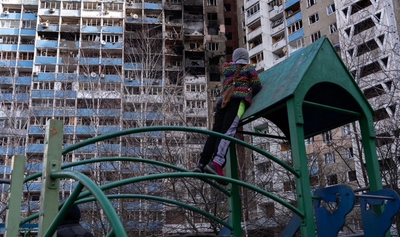


A debate held Tuesday at the Palace of the Parliament focused on assessing Ukraine's situation after more than three years of Russian aggression and discussing solutions for the country's reconstruction in a spirit of solidarity.
The debate, titled "Eastern European Members of the European Parliament Alliance for the Reconstruction of Ukraine" (AMEERU), organized at the initiative of MEPs Vasile Dincu and Gheorghe Falca, co-presidents of AMEERU, is aimed at compiling a document of reconstruction ideas from civil society, institutions, and entrepreneurs. This document will be submitted to authorities in Ukraine, Romania, and the Republic of Moldova, as well as to the European Parliament and the European Commission.
Senate Vice President Mihai Cote, host of the event, emphasized that the reconstruction of Ukraine requires both a legislative framework adapted to the rapid pace of events and a civil component that involves companies and educational institutions.
"We need clear, simple, and transparent procedures for every process involving strategic partnerships. Beyond these partnerships, control mechanisms will be what gives confidence to those who engage in Ukraine's reconstruction. Romania has stood with the Ukrainian people since the beginning of the war, providing humanitarian aid, facilitating the transit of essential goods, and contributing to strengthening institutional and economic resilience. At the same time, Romania continues to deepen its strategic partnership with the Republic of Moldova, a key pillar of stability and security on the EU's eastern border. We support our neighbors because we are aware of our responsibilities as NATO and EU members, sharing a border with the bloodiest conflict since World War II," Cotet said in his opening remarks.
He added that "reconstructing Ukraine is not just about rebuilding destroyed infrastructure, but also an opportunity to strengthen trust among states, stimulate economic cooperation, and promote shared democratic values."
"I am convinced that the outcomes of this meeting will reflect our collective commitment to stability, cooperation, and progress, creating a hub of stability in the Black Sea region, a stability that will foster economic growth supported by the 60 million inhabitants of this area," he added.

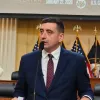
MEP Vasile Dincu, co-president of AMEERU, stressed that "rebuilding Ukraine is not just an infrastructure project; it is not limited to repairing roads, schools, or hospitals destroyed by the war, but entails restoring communities torn apart, healing unseen wounds, rebuilding trust in institutions, and instilling hope that life can return to normal."
He proposed a regional partnership between Romania, Ukraine, and the Republic of Moldova that would function "as a unified ecosystem, integrated into the European Union," in which "cross-border public-private consortia can quickly design and implement local solutions."
"The shield of European democracy is not just a slogan in these times. It is a protective infrastructure needed against disinformation, institutional capture, and corruption. We must not forget human capital and dignity. People are at the center of this process. Training programs should focus on recognizing skills, integrating refugees into the economy, and supporting affected communities. We cannot have sustainable reconstruction if we think only about physical infrastructure. (...) Rebuilding Ukraine requires more than government plans and private investment; it requires a chain of solidarity from European states to large and small companies, NGOs, and local communities. Every link counts," Dincu said.
Deputy Speaker of the Chamber of Deputies Adrian Cozma emphasized that "the bloody war in Ukraine must end as soon as possible," because children and innocent people are dying there.
"All of Europe is being tested and wants to contribute to Ukraine's reconstruction, and I believe we will succeed," Cozma said.
He proposed modernizing border railway station infrastructure, digitizing and securing communications between stations and railway operators, and improving the training of personnel serving the Romania-Republic of Moldova-Ukraine border.
Ukrainian Ambassador to Romania Ihor Prokopchuk noted that although the war continues, Ukraine has already begun "rapid reconstruction and recovery," a process he considers real and tangible. He urged Romanian entrepreneurs and local authorities to collaborate with Ukrainian partners on reconstruction projects in infrastructure, renewable energy, agriculture, healthcare, and education.
Secretary of State at the Ministry of Justice Ioan Turc highlighted that Ukraine's reconstruction is important for Europe and "should not be viewed solely in business terms or selfishly, but from the perspective of building a hub of long-term economic development, friendship, and cooperation."
AMEERU co-president, MEP Gheorghe Falca, noted that "logistically and humanly, in a very short time, a country cannot be rebuilt without external support."
"Clearly, all countries want to be part of this reconstruction, but Romania is a friendly and close country, and it is much easier logistically to work within this relationship Romania, the Republic of Moldova, Poland, Ukraine," Falca said.
Director General of AGERPRES National News Agency Claudia Nicolae highlighted that the devastation in Ukraine has been described in words and captured in photographs by correspondent Cristian Lupascu, who has been present over 20 times in Kyiv and other locations.
"This is our role to disseminate information accurately and transparently," Nicolae said.
Ciprian Bucur, advisor to the Governor of the National Bank of Moldova, expressed his respect for the Ukrainian people for their courage and resilience and stated that "financial stability represents the foundation for a healthy economic recovery process."
"We know that reconstruction will involve massive investments as well as structural reforms, require institution-building, modernization of financial systems, and implementation of coherent and sustainable economic policies. A process of this magnitude requires a framework of trust, transparency, and responsibility. The Republic of Moldova, as a neighboring state, has felt the war's impact directly we have faced economic, social, and financial pressures, but we demonstrated resilience and managed to strengthen internal stability mechanisms. This experience shows that solidarity and cooperation in such times are essential. Therefore, we appreciate that the partnership between states I mean Ukraine, Romania, and the Republic of Moldova as well as between authorities and the private sector, with the support of international financial institutions, will be decisive in Ukraine's reconstruction," Bucur explained.















Comentează