



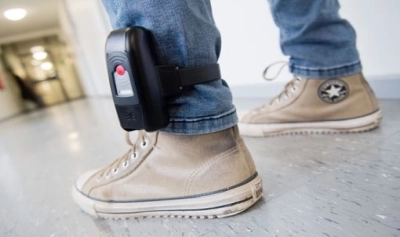


The government on Thursday passed an emergency ordinance allowing the use of electronic tagging in the case of persons under judicial control or house arrest, as well as for persons released on parole.
"Started as a pilot project in 2022 for the protection of victims of domestic violence, electronic tagging will be used from October 1, 2024, in a pilot system also for judicial control, bail and house arrest.
At the same time, the emergency ordinance provides for the extension of the use of electronic tagging even when the court has ordered the convicted during the conditional release not to be in certain places or certain sports or cultural event, public gatherings established by the court, and also not to communicate with the victim or family members, with the participants in the commission of the crime or with other persons.
Also, a new category of alert for approaching the border is introduced," government spokesman Mihai Constantin said at the end of a government meeting.
According to official statistics, there are 9,168 people under judicial control, including 24 on bail as well as 1,288 people under house arrest.
Basically, from October 1, these people can be monitored using electronic tagging.
Justice Minister Alina Gorghiu says this legislative amendment is an "important step to combat fugitives."
"Today, another obstacle has been put in the way of people who want to evade criminal liability for their deeds. Law 146 of 2021, a National Liberal Party (PNL) initiative, created this legal framework that is currently applicable in cases of domestic violence, in the case of protection orders issued to protect victims. But, from October 1, the defendants placed under judicial control or judicial control on bail can also be electronically monitored and the same measure can be applied to defendants ordered on house arrest," says Gorghiu.































Comentează