



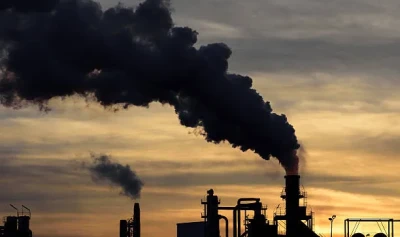


Romania supports the standards for reducing CO2 emissions for cars and vans, provided that pragmatic measures are adopted to ensure a predictable and sustainable transition of the automotive industry and maintain the competitiveness of European production, stated the Secretary General of the Ministry of Environment, Alexandru Avram, at the Environment Council in Brussels.
According to a press release from the Ministry of Environment, Avram participated, on Tuesday, in Brussels, at the first formal meeting of the Environment Council, organized by the Cypriot Presidency of the EU Council.
"On the agenda of the discussions were topics such as CO2 emission standards for cars and vans, post-2030 climate policies, the bioeconomy and global environmental diplomacy," the document states.
Also, during the meeting, a report on the 12th plenary session of the Intergovernmental Science-Policy Platform on Biodiversity and Ecosystem Services (IPBES-12) was presented.
According to the cited source, the first session focused on carbon dioxide emission standards for cars and vans.
"Romania supports the proposal to the extent that it facilitates an efficient transition of the automotive industry, based on predictability, economic sustainability and technological neutrality. It is important to maintain credible emission reduction trajectories, taking into account the structural differences that influence the compliance capacity of car manufacturers. We consider pragmatic objectives and measures necessary to support the European automotive industry to maintain its production in Europe and to be able to offer low-emission vehicles at affordable prices. At the same time, these measures must be calibrated to maintain the trajectory necessary to meet the Union's climate objectives," stated Secretary General Alexandru Avram, quoted in the press release.
The dignitary stressed that, in Romania, the automotive market is exposed to the import of second-hand vehicles with high emissions, while the cost of electric vehicles and energy can represent a barrier to the purchase of new cars. Therefore, at the national level, measures to stimulate the purchase of new, low-emission vehicles must be continued.

At the same time, the second session brought to the forefront discussions on decarbonization efforts in the context of post-2030 climate policies.
"Accelerating the transition requires considerable financial support, which should contribute to reducing disparities between EU regions, eliminating grid bottlenecks and developing the necessary interconnections. At the same time, decarbonization must be fair, not place an additional burden on energy-vulnerable households and micro-enterprises, and be adapted sectorally and to the capacities of each member state," added Alexandru Avram.
Romania supports the introduction of a robust set of flexibility mechanisms, which would allow member states to realistically contribute to achieving the intermediate objective for 2040, the cited source mentions.
On the other hand, the third session highlighted the importance of strengthening the EU's strategic collaboration in environmental diplomacy at the global level, through partnerships and science-based engagement, in a changing geopolitical context.
"For Romania, protecting the integrity of multilateral environmental processes and using them to strengthen peace and confidence remains a priority. In the current geopolitical context, it is necessary to develop flexible coalitions on key issues and to ensure that environmental diplomacy is supported by solid scientific and commercial ties with partner countries. Environmental and sustainable development priorities must be integrated into any dialogue with third countries," Alexandru Avram emphasized.
In his intervention on the bio-economy, the Secretary General of the Ministry of Environment emphasized that an efficient bio-economy can generate quality jobs in rural areas and contribute to the development of an expanded market for bio-products, at prices accessible to citizens.
"Policy coherence in the areas of food, energy, climate and nature protection remains essential, and the development of local value chains is crucial for the EU's competitiveness and resilience. In this context, we appreciate the recognition of the important role of small farmers in maintaining sustainability and strengthening a fair and equitable European bioeconomy," the statement added.
Also, Secretary General Alexandru Avram participated, on Tuesday morning, in the coordination meeting organized by Poland, on post-2030 decarbonization efforts, with a focus on the EU ETS review.AGERPRES















Comentează