

Researchers from 15 countries studied what happens to molecules after they absorb light at Babes-Bolyai University (UBB) in Cluj-Napoca between 28 September and 2 October, with the research having applications including in cancer therapy.
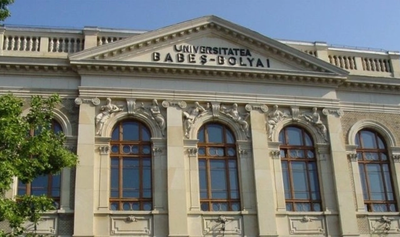
'Babes-Bolyai University of Cluj-Napoca (UBB) hosted the third edition of the international school Quantum Chemistry of Excited States' (QCES-2026) from 28 September to 2 October, focusing on the methods used in quantum chemistry to describe what happens to molecules after they absorb light. This year's edition brought together 27 PhD students and postdoctoral researchers in chemistry, physics and materials science from 15 countries across Europe, Asia and North America. Lectures and practical sessions were delivered by specialists from universities and research institutes in Sweden, Poland, the United Kingdom, Italy, Germany and Romania. The event was organised with the support of the Ministry of Education and Research,' UBB said in a press release sent on Monday, agerpres reports.
According to the press release, the excited states of molecules underpin a wide range of processes and technologies, including photosynthesis and vision, solar cells and OLED displays, photodynamic therapy for certain types of cancer, fluorescent probes used in biology and medicine, and the light stability of medicines and pigments. Computationally describing these states is challenging because methods that work efficiently for molecules in their ground state often prove inadequate for excited states. The school covered the subject from theoretical fundamentals to state-of-the-art multiconfigurational methods and comparisons between calculated and experimentally measured spectra.
The teaching sessions were delivered by Valera Veryazov (Lund University, school coordinator), Katarzyna Pernal (Lodz University of Technology), Felix Plasser (Loughborough University) and Luca De Vico (University of Siena), as well as Giovanni Li Manni (Max Planck Institute for Solid State Research, Stuttgart) and the local organisers, Dr Adrian M. V. Branzanic and Professor Radu Silaghi-Dumitrescu of UBB.
Participants worked directly on their own computers with software used in current research and presented their projects during a poster session.
'When a molecule absorbs light, it has an extremely short time to decide what to do with the energy it has received: emit it, convert it into heat or break a chemical bond. Correctly calculating what happens during that interval is one of the major challenges of quantum chemistry and, for a week in Cluj, the subject was taught by the very people developing these methods. The fact that the school has returned to UBB for the third time shows that it has found a home here,' Radu Silaghi-Dumitrescu, one of the school's local organisers, said, according to the same source.
The international school Quantum Chemistry of Excited States' is aimed at doctor's degree students and postdoctoral researchers in chemistry, physics, materials science and related fields, with either theoretical or experimental backgrounds. Admission is based on an application, and the programme combines lectures, intensive practical sessions, discussions and a poster session.