




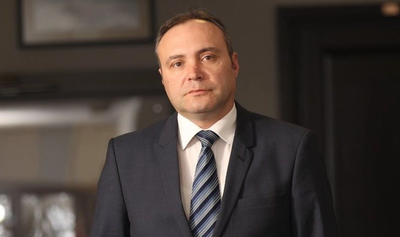


Romania has not been confronted with a single energy crisis, but with a succession of overlapping crises generated by underinvestment, unstable regulation, political interventions and insufficiently prepared liberalisation processes, and the current problems in the sector stem from vulnerabilities accumulated after 1990, according to President of the Intelligent Energy Association (AEI) Dumitru Chisalita.
"Romania has not been confronted with a single energy crisis, but has moved from crisis to crisis, a succession of overlapping crises: the crisis of communist legacy, the crisis of delayed investment, the crisis of incomplete privatisation, the crisis of politicised regulation, the crisis of poorly prepared liberalisation and the price crisis of 2021-2022. Liberalisation is not a cause, only a way of bringing to the surface all the accumulated weaknesses of the Romanian energy system," the AEI president states in an analysis on the development of the Romanian energy sector between 1990 and 2026, agerpres reports.
Referring to the 1990-2000 period, the AEI president mentioned that the decline in energy consumption after the collapse of industry masked structural problems in the system.
Regarding the restructuring and privatisation period, Chisalita believes that the process was not accompanied by sufficient measures for the development of the sector.
The analysis also highlights the impact of legislative changes on investment in renewable energy.
"After Romania's accession to the EU, renewable energy was encouraged through green certificates. Significant investments emerged in wind and solar. But when the costs began to appear in bills, the state changed the rules. Investors understood that Romania can change the rules during the game. It was a crisis of credibility: the state called for private capital, then scared it away," Dumitru Chisalita stated.
According to him, energy market liberalisation took place at an unfavourable moment, marked by sharp price increases at European level.
He brings to mind that Romania recorded one of the steepest rises in household energy prices in the European Union.
"In Romania, the impact was severe. Eurostat reported that in the second half of 2022, electricity prices for households rose by 112% compared with the same period in 2021, the highest increase in the EU. Causes: liberalisation without sufficient protection, rising European gas prices, electricity prices being linked to gas, volatile spot market, lack of stable bilateral contracts, insufficiently flexible domestic production, disastrous public communication," Chisalita said.
Regarding price capping and compensation measures, he argues that they limited the impact of price increases on consumers, however created other problems.
In his view, the energy sector is currently facing challenges similar to those of the past, despite the advantages offered by the national energy mix.


In conclusion, he believes that the sector's problems are the result of vulnerabilities accumulated over time and cannot be explained solely by market liberalisation.
"Romania did not fail because it liberalised energy. It failed because it liberalised it late, poorly prepared and over a fragile system. (...) The formula of the Romanian crisis is this: non-functional free market plus old infrastructure plus delayed investments plus unstable rules plus populist interventions plus political influences plus internal and external interest groups equals high bills and public mistrust," the president of the AEI added.

















Comentează