



In a recent interview with agerpres, Attorney General Augustin Lazar argues that the law establishing a special section to investigate magistrates "turns Romania back 27 years," because road accidents, family abandonment, denunciations filed by inmates, corruption and other "imaginable and unimaginable things" should not be investigated pell-mell.
Lazar was asked about how he will manage the new body that will have to be set up within the General Prosecution Service, after the Constitutional Court green-lighted a special section to police the magistrates.
"The mere fact of the constitutionality of a text does not mean that text of the law would be timely and good. The Constitutional Court does not examine such aspects. It is mandatory after it is published and comes into force. But until then, the decision makers must know that would set Romania back about 27 years. And when I tell you that I do not exaggerate, because in the meantime the world has evolved, the principle of specialising magistrates in one or another area has been adopted. There is no longer a magistrate who is good for all, and there is no way a magistrate can do everything. You cannot investigate in the same place traffic accidents, family abandonment, denunciations - filed by inmates and convicts complaining that all evidence was not presented for their criminal trials - corruption and other imaginable and unimaginable things for which criminal charges are pressed against prosecutors," said Lazar.
He noted that such instances have been looked into.
"For example, last year, how many such acts were denounced throughout the country that had been managed, dealt with at the level of the prosecutor's offices with the courts of appeal, according to their current jurisdiction, which is the same as it was in 1993. So, as far back as 1993, the lawmakers got smart and realised that gathering all cases in just one place, one office in Bucharest, is un-European and not okay, and that we have to reform ourselves, to entrust the prosecutors at the courts of appeals with verifying all aspects of the various things, denunciations against prosecutors up to the level of the courts of appeal, as that the others at the Supreme Court are in the province of the Prosecution Office with the Supreme Court right now."
Lazar explained that each of the 20 prosecutors who will work at this special section will have about 200 cases to work on.
"Well, we are now tending to do what has never existed in our tradition, and if there was something smaller and less spectacular than what the legislator now wants to introduce, it existed in 1993 when no way there were so many thousands of papers that these prosecutors need to work with. Therefore, the 20 prosecutors at the section that the legislator envisages, after last year's workload, should have simultaneously 200 court files to work on, pell-mell road accidents, family abandonments, corruption. Last year six magistrates were sent to court - three prosecutors and three judges. But the labour and the institutional process of screening and separating relevant from irrelevant cases should not be here in this office because those who will have 200 files each on their desk may claim that they could not work on the relevant ones, because they had to take care of the others as well," added Lazar.
He mentioned a statement made in the public space according to which prosecutors must solve the cases in order in which they are filed.
"But then where are we going? Because the world, in the meantime, the legal world, has acquired this principle of specialisation and no one is doing everything anymore. Those who are dealing with corruption only deal with corruption, those specialising in traffic accidents deal with those issues only. So, we have always said this, but we have not seen any impact study contradicting us. Yet, we have heard reproaches that prosecutors do not enforce the law. In my book, this is not legal dialogue. Organisational culture requires us to come up with arguments, all sides, and, finally, by analysing the disputation to accept that a truly reasonable solution has been found that reconciles everyone. But imposing on practitioners how to work on something you do not know, that's absolutely surprising," he said.
Lazar pointed out that there would also be problems with judicial police officers who would investigate prosecutors and judges.
"But it will be seen that the 200 files cannot be handled by each prosecutor, and that there should be a way to delegate law enforcement officers. Then, there will be the problem that judicial police officers investigating prosecutors and judges will not please many, because it is not normal to be so. And from here on, things will get patched and ad-hoc hasty solutions will be offered when no impact studies are carried out," Lazar said.
The interview with Attorney General Augustin Lazar is scheduled to be posted on Saturday.
AG Lazar about special section: You cannot investigate traffic accidents and corruption pell-mell
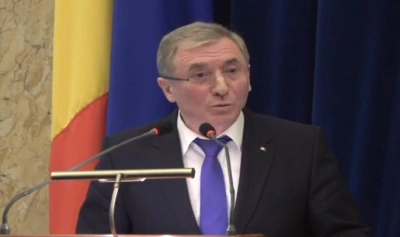
Sursă foto: captura privesc.eu
Distribuie articolul


Distribuie articolul

Explorează subiectul

București 17°C
17°C
17°CArticole Similare

10
ForMin Toiu: Femicide law a 'long overdue' step for Romania
10
11
Rogobete: An order regarding organization and schedule of staff in healthcare units will be published in transparency
11

8
Dumitru Costin (BNS) on fuel ordinance: Thin solutions fail to reflect realities
8

4
Emergency Ordinance regarding fuel crisis to be adopted in Thursday's Government meeting
4
15
Author Ana Blandiana to be awarded the title of Doctor Horis Cause of the University of Bucharest
15

13
Senate President Abrudean: Romania continues to prioritize projects with a strategic impact
13

11
Euro trades at RON 5.0952
11

35
First Lady Gradinaru holds speech about the responsible use of technology by children at Georgetown University
35

11
Farmers abandon crops as diesel prices approach 10 lei per litre, warns expert Chisalita
11

16
Purple Day marked by initiatives aimed at reducing stigma and raising awareness
16

8
INS: Industrial turnover falls 16.3% in January compared with December 2025
8

15
PM Bolojan: Ordinance on crisis situation on fuel market to be adopted on Wednesday or Thursday
15
18
PM Bolojan: We are going to slash tens of thousands of jobs in the central and local apparatus
18













Comentează