



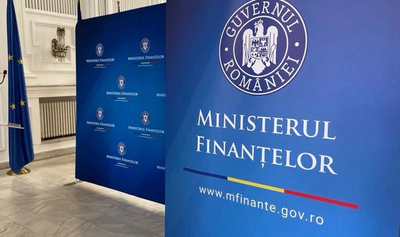


The Ministry of Finance is reorganising the Romanian Customs Authority to align the customs system with the current demands of the economy and with the new European and international guidelines.
According to the Ministry of Finance, the reform aims to transition to a modern customs model, based on centralised risk analysis, digitalisation and subsequent control, in accordance with the standards of the World Customs Organisation and the reform guidelines of the European Union.
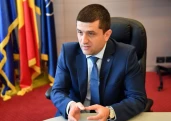
"With this reorganisation, we are taking a new step forward towards a customs system that is more efficient, more transparent and better adapted to the current economic realities. The clear separation of functions, the use of risk analysis and the digitalisation of processes allow us to reduce turnaround times and concentrate control where it is really necessary. It is a change of approach, aimed at supporting licit trade and strengthening the state's control capacity. The existing structure no longer responded effectively to operational challenges, being characterised by a high level of hierarchy, overlapping attributions and a slow decision-making system, which generated long clearance times and administrative pressure on business operators," according to Finance Minister Alexandru Nazare.
The new organisation is not just a simple structural change, but a paradigm shift in the functioning of the Customs Authority, based on three essential principles: centralised risk analysis; control carried out locally; implementing a rapid decision-making process with clearly defined responsibilities.
The reorganisation is specifically aimed at simplifying the central structure by reducing hierarchical levels, including the transformation of directorates-general into directorates, in order to eliminate administrative steps that slowed down the decision-making process.
At the same time, the intermediate structures without a direct operational role are abolished, in particular the General Directorate for Customs Control Coordination, whose attributions are redistributed to specialised departments.
Analysis, operational coordination and intelligence are taken over by the Directorate for Risk Analysis and Customs Investigations (DARIV), while the responsibilities regarding the methodology and procedures are transferred to the Directorate for Customs Procedures and Excise Products (DPVPA).

A central element of the reform is the clear separation of powers, by delimiting the risk analysis from the control activity. Thus, the risk analysis will be carried out at central level, and the control will be carried out locally by the regional customs directorates, which allows for better objectivity and operational efficiency.
At the same time, risk analysis will be used differentially by type of control: for the customs clearing operations, for the activity of the mobile teams and for the subsequent control, according to MF.
These analyses will allow a more efficient allocation of resources and an increase in the capacity to prevent and combat fraud. Also, the way of carrying out customs control is reconfigured, by shifting focus from the checks carried out at the border points to the subsequent control and the interventions of mobile teams. In this regard, the mobile teams, canine teams and subsequent control structures will be strengthened, in order to allow faster and better targeted interventions.
At the same time, the reorganisation also introduces a modern mechanism of operational coordination, by establishing a national dispatch that will operate permanently, ensuring the real-time management of alerts and notifications, as well as a more efficient institutional cooperation.
"By these measures, the Ministry of Finance aims to reduce the clearance time, eliminate unnecessary controls at border crossings and facilitate licit trade, while strengthening the control capacity and increasing the operational efficiency of the Romanian Customs Authority," says MF.






















Comentează