



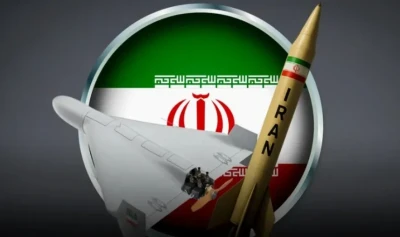


Romania is not a military target for Iran, but it will feel the impact of the collapse of the energy market and the disruption of fertilizer transport - effects that will drive up prices for basic goods - says Ioana Constantin Bercean, researcher at the "Ion I.C. Bratianu" Institute of Political Sciences and International Relations of the Romanian Academy and an expert on the Middle East.
She noted that the shockwave of the conflict in the region will reach Romanian citizens through the economic "pain" generated globally.
"From a security point of view, Romania is stable and there is no imminent danger from Iran. From a strictly military perspective, Romania is not a target for the Iranians. It may sound unorthodox, but Romania is simply not a point of military interest for Iran. Their strategic targets are in the Middle East, where the United States has military bases," Bercean told AGERPRES.
She added that Romanians should not fear an attack or the possibility of an Iranian missile entering national airspace, stressing that the only real security concern remains the war in Ukraine, as drones have already fallen on Romanian soil.
Bercean sees the most severe impact in the fields of energy security and raw materials, pointing to Tehran's strategy of "asymmetric war".
"The Iranians' intention from the start was to cause as much 'pain' as possible to America, Israel and Western partners. And that pain is tied particularly to the energy market. Iran declared in the first days of this war that its goal was to push the price of crude to 200 dollars a barrel. That already means a sudden shock to the energy market, which we are already seeing. Including this sensitivity of the energy market to what is happening there, and which will probably need several years to subside," the researcher stated.
She also warned of consequences for agriculture due to the disrupted fertilizer transport.
"Beyond crude, oil and gas, fertilizers are essential - especially for agriculture. The interruption of fertilizer shipments from the Middle East to Europe has already seriously affected farmers. We will feel the pinch toward the end of the year, when prices for basic products - margarine, bread, bakery goods - will rise significantly," Bercean said.

Domestically, she dismissed the idea of an imminent collapse of the regime in Tehran, citing the deep identity foundations of Iranian society.
"When Iran was attacked, even regime opponents decided they must first defend their country from an external enemy and only then address internal problems, on their own terms. (...) A considerable part of Iranians may hate their regime, but they hate outside intervention even more. Preserving Iran within its current borders is more important than anything else," she explained.
The expert believes the current crisis is more likely to lead to a militarization of power than to democratization.
"What we may see is a militarized leadership, perhaps similar to Pakistan's model. We cannot speak of a 'regime change', no matter how broadly the idea is circulated. I think the Americans have understood this as well," she argued.
Looking ahead, she stressed that Iran is relying on the time factor.
"This asymmetric war is not about winning militarily - because defeating two nuclear powers, the United States and Israel, is nearly impossible. But the more economic pain it inflicts on energy and food security, the more effective it becomes. For the Iranians, that Afghan proverb applies perfectly: 'You have the clocks, we have the time'," she said.
Ioana Constantin Bercean holds degrees in International Relations from Babes-Bolyai University, two master's degrees in International Relations and Sociology (Security Studies), and two PhDs - one in International Relations, focused on Iran's nuclear diplomacy, and one in Sociology, focused on religion, identity and nationalism in the Islamic Republic. With more than four years of field experience in the Middle East and fluency in Persian and Arabic, she is also an associate professor at the University of Bucharest's Faculty of Sociology, teaching in the Security Studies Master's program.















Comentează