



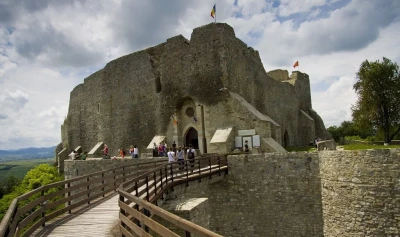


Built more than 600 years ago during the reign of Petru I Musat, the Neamt Fortress remains one of the key sites of Moldova's medieval history. One of its most intriguing secrets came to light about 80 years ago, during the first archaeological excavations here: a large-scale 17th-century coinage counterfeiting operation carried out under voivode Eustatie Dabija.
The story, which sounds like the plot of a modern film, is entirely real. In one of the fortress rooms - known today as the "Mint" - coins were forged with the ruler's approval. Archaeologists uncovered dies inside the fortress walls showing that between 1661 and 1665, during Dabija's reign, a skilled craftsman produced counterfeit Polish, Swedish and Prussian coins.
"These counterfeit shillings were spread by the thousands in Moldova and, as evidence shows, also reached Muntenia," Dr. Vasile Diaconu, archaeologist and scientific researcher at the Neamt National Museum Complex, told AGERPRES.
He explained that the first archaeological research at the fortress, carried out between 1939 and 1942, aimed mainly at uncovering the walls rather than detailed stratigraphy or chronology. Even so, in the room beneath the Saint Nicholas Chapel, excavators found coins and monetary remains that pointed to a clandestine minting workshop. Over time, the room became known as the "Mint", although it was not an official mint but a secret counterfeiting site.
The Neamt workshop was not unique in Moldova. For decades, historians believed the main counterfeiting center under Dabija was at the Suceava Fortress, where a Polish craftsman, Titus Livius Borattini - who had previously held minting rights in Poland - operated with the voivode's approval. "The question now is how a similar workshop appeared at Neamt. Did Borattini work here too, or was it one of his apprentices?," Dr. Diaconu said.
Counterfeiters at Neamt produced imitations of small-denomination coins that circulated widely. Although the fakes did not match the exact dimensions or morphology of the originals, most people of the time lacked the knowledge to detect the differences. "The craftsman relied on the fact that ordinary people could not read or interpret the details of a coin. They recognized only the general shape and metal," Dr. Diaconu explained.
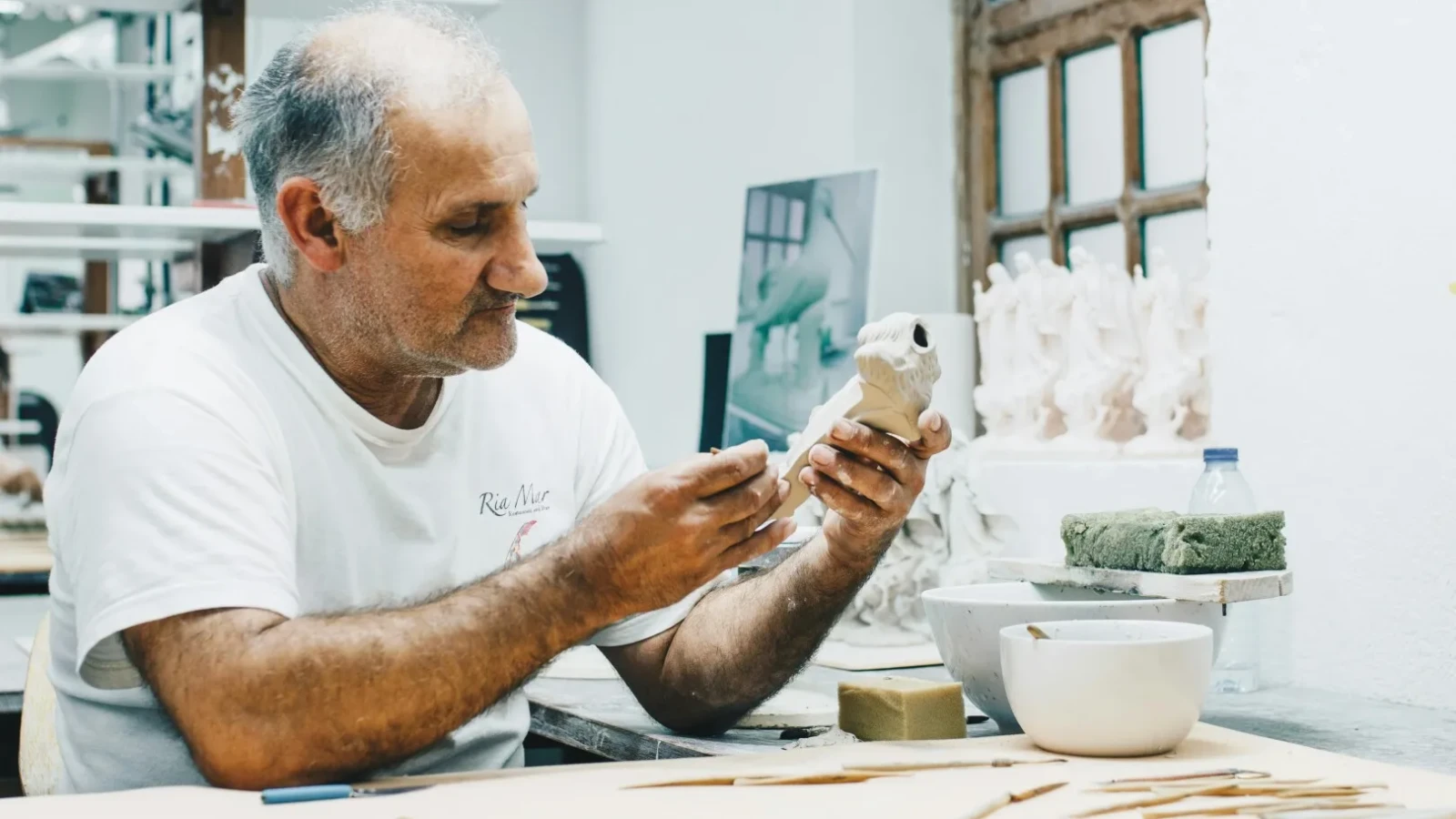

Despite limited knowledge of foreign currencies, locals understood exchange values. "Medieval currency circulation was extremely diverse - Polish, Turkish, Hungarian, Swedish coins all circulated. People knew the parity, but didn't always know how to distinguish originals from fakes," he said. Under Borattini's supervision, even coins bearing the effigy of Eustatie Dabija were minted, suggesting at least tacit approval from the ruler.
The fortress has yielded other monetary finds as well. In the 1960s, archaeologists discovered a hoard of late-17th-century silver coins in the outer courtyard. Historians believe the owner hid it during a time of conflict, intending to retrieve it later - a moment that never came, for reasons still unknown.
























Comentează