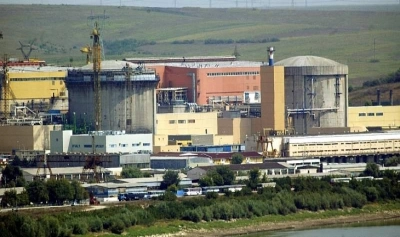


Unit 1 at the Cernavoda nuclear power plant was stopped and disconnected from the National Energy Grid on Tuesday morning, due an unprecedent very low level of the Danube.
According to the company's representatives, in the event that certain parameters associated with the low level of the Danube approach the allowed operating limits, in compliance with nuclear safety procedures and standards, the nuclear power plant experts apply the necessary operational measures to maintain the safety margins, including the decision to shut down one unit or even both if the current situation does not change.
"Such measures have a preventive role and aim to protect nuclear safety and the reliability of installations. SN Nuclearelectrica SA carefully monitors the evolution of the Danube River level in order to ensure safe operation. Keeping Cernavoda NPP Unit 1 in a safe stopped state has no impact on nuclear safety, personnel or the environment," reads a press release from Nuclearelectrica, which manages the Cernavoda Nuclear Power Plant.
According to the latest hydrological forecast, valid for July 27, 07:00hrs - August 3, 07:00hrs, the flow of the Danube at the entrance in Romania, the Bazias portion, will be relatively stationary at values of 1650 m3/s in the first two days and 1600 m3/s in the following days, until the end of the interval, being below the multiannual averages of July (4700 m3/s) and August (3900m3/s). Downstream of the Iron Gates, the flows will generally be slightly decreasing.
The lowest flow recorded by the Danube was in 1985 when it had 1400 cubic meters/second at the entrance to the country, the National Administration of Romanian Waters recently showed.