



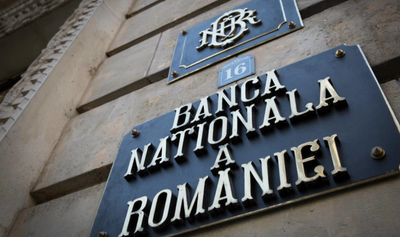


Romania's energy dependence is significantly lower compared to the countries in the region and compared to most European states, the Deputy Governor of the National Bank of Romania (BNR), Cosmin Marinescu, said on Monday at the "Economic Trends 2026" conference.
"Currently, the global economy is going through a period dominated by deep adjustments amid the crises of recent years - pandemic, war, energy crisis, geopolitical tensions, and the war in the Middle East is now generating severe rounds of economic volatility, as the international oil market reacts quickly and sharply, with global implications. Existing research shows us that energy shocks are transmitted in the economy through multiple channels. At first, for a few weeks, energy shocks affect transport costs. Subsequently, within a few months, production costs and inflationary expectations are affected, but these mechanisms do not operate simultaneously or uniformly. In the case of Romania, however, there are some elements of resilience. The latest data show that Romania's energy dependence is significantly lower compared to the countries in the region, in fact, compared to most European states," Marinescu said.
According to him, only 30% of Romania's energy demand was met by imports in recent years, a level comparable to Sweden, as against 39% in the case of the Czech Republic, 46% in Poland and 49% in Hungary.
In Marinescu's opinion, Romania is positioned, in terms of energy intensity, better than the countries in the region and even than the European Union average.
"Another equally important indicator is the energy intensity, namely the amount of oil equivalent energy in relation to a thousand euros of Gross Domestic Product. Romania is also positioned from this perspective better than the countries in the region and then the Union average. We are also talking about certain structural transformations that our economy has recorded lately. We are no longer just talking about goals, but we are talking about potential and realism. Romania can be a pillar of stability in the regional energy architecture, due to the own resources it has, including in the Black Sea, and also thanks to the resilience of benchmark companies in the energy field (...). Companies are the ones that most acutely feel the volatility on the energy markets, and the business prospects show us how these developments are transmitted through the price channel," said the BNR official.
The European Business Women's Employers' Association (PEFA) organised on Monday the fourth edition of the conference "Economic Trends 2026". The event brought together decision-makers, experts and representatives of the business community to outline the main directions of the macroeconomic, energy and entrepreneurial developments of the current year.


The AGERPRES National News Agency is a media partner of the event.
























Comentează