



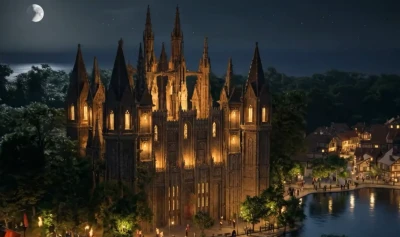


Why does the figure of Dracula, a historical character transformed into a global myth, fascinate? This article explores the evolution of Vlad the Impaler, ruler of Wallachia, into the modern vampiric legend, analyzing the influence of Bram Stoker’s novel, the cultural impact, and the touristic legacy in Transylvania. We will dissect how a national hero became a universal symbol of fear and fascination.
Vlad the Impaler Dracula - from Wallachian voivode to vampiric legend
Vlad III, known as Vlad Țepeș or Vlad Drăculea, was the ruler of Wallachia in the 15th century. Born around 1431 in the Sighișoara fortress, he was the son of Vlad Dracul, a member of the Order of the Dragon, a chivalric organization created for the defense of Christianity against Ottoman expansion.
The surname "Drăculea" derives from his father’s nickname and means "the son of the dragon" or "the son of the devil," depending on the interpretation. His adversaries, especially the Saxon merchants from Transylvania, preferred the negative connotation, spreading stories about his cruelty. His preferred method of punishment — impalement — earned him the nickname Țepeș (the Impaler) and fueled numerous chronicles describing mass executions.
In Romania, Vlad Țepeș is considered a defender of national independence, a leader who resisted the pressure of the Ottoman Empire and maintained order during a turbulent period. His reputation as a severe but just ruler contrasts strongly with the image of the bloody vampire from fiction.


The transformation of Vlad Țepeș into a vampiric legend occurred centuries later, when the Irish writer Bram Stoker published the novel "Dracula" in 1897, amplifying the fame and mystery linked to Vlad Țepeș. Stoker never visited Romania, but he researched European folklore about vampires and was inspired by works such as "Transylvanian Superstitions" by Emily Gerard. Although the novel mentions Transylvania as a location, the direct connection with the historical personality of Vlad Țepeș remains vague and rather symbolic.
The Wallachian voivode became, through literature, a global symbol of vampirism, a transformation that continues to influence the public perception of this complex historical character. But how did Bram Stoker manage to transform a medieval ruler into a symbol of immortal evil?
Bram Stoker’s Dracula - the novel that created the modern myth of the vampire
The novel "Dracula," published in 1897, marked a decisive moment in the evolution of Gothic literature and defined the modern image of the vampire. Bram Stoker, an Irish writer and theater manager, combined elements from European folklore, including Romanian superstitions, mythology about vampires, and fragments from the history of Eastern Europe to create an iconic character.
The story follows the journey of lawyer Jonathan Harker to Transylvania, where he is to conclude a real estate transaction with Count Dracula. As Harker discovers the true nature of his host — an immortal vampire with supernatural powers — the narrative transforms into an epic struggle between good and evil, between modernity and the dark forces of the past.
Stoker built the main character as a cultivated but evil Transylvanian nobleman, capable of transforming into an animal, controlling the elements of nature, and hypnotizing victims. This complexity made Dracula much more than a simple monster — he represents a sophisticated, intelligent threat that infiltrates Victorian society.
The narrative structure of the novel, composed of journals, letters, and newspaper articles, added a layer of authenticity and suspense. The struggle led by Professor Abraham Van Helsing and his allies against the vampire established the patterns for countless subsequent works in the horror genre. Although initially it was not an immediate commercial success, the novel gained popularity with the appearance of cinematic adaptations, creating a cultural archetype that transcends literature. But where is the castle of this terrifying count located, in reality or only in our imagination?
Dracula’s Castle - between reality and myth
The question about the real location of Dracula’s castle continues to fascinate visitors and researchers. In popular culture, Bran Castle near Brașov has become the symbol of this legend, although its connection with Vlad Țepeș is circumstantial rather than historical.
Bran Castle, with its Gothic architecture and strategic position on a steep rock, corresponds to the descriptions in Stoker’s novel. It is assumed that the Irish writer was inspired by illustrations of this medieval fortification, especially from Charles Boner’s work "Transylvania: Its Product and Its People." The dramatic appearance of the castle and its mysterious atmosphere contributed to the association with the vampiric legend.
Historical documents attest that Vlad Țepeș had a limited connection with Bran Castle — he was held here for a short period in the autumn of 1462, before being transferred to Hungary. However, this minimal historical connection did not prevent the transformation of the castle into a tourist magnet.
Other locations have a more authentic connection with the Wallachian voivode. Poenari Fortress, located on the banks of the Argeș River, was one of his real residences, and the Princely Court in Târgoviște served as the capital during his reign. Sighișoara Fortress, his birthplace, also offers a more faithful historical perspective. However, Bran Castle remains the most visited tourist objective associated with the myth. But beyond the castle walls, how did the legend of Dracula influence popular culture?
The Dracula myth in culture - from literature to cinematography
The cultural impact of Dracula far exceeds the pages of the original novel, transforming into a global phenomenon that has influenced literature, cinematography, and visual arts. The character created by Stoker has become a cultural archetype, constantly reinterpreted over the decades.
In cinematography, Dracula has had a remarkable evolution. The silent film "Nosferatu: A Symphony of Horror" from 1922, although an unauthorized adaptation with changed names, established the visual aesthetic of the vampire on screen. Bela Lugosi defined the classic image of the count in the 1931 production, with his black cape and iconic Transylvanian accent. Christopher Lee took over the baton between 1958 and 1973, performing the character in seven films produced by Hammer Films, bringing a special intensity and magnetism.
Francis Ford Coppola’s 1992 adaptation, with Gary Oldman in the leading role, was considered by critics as one of the most faithful screenings of the novel, exploring the romantic and tragic dimensions of the character. The film demonstrated that the myth can be reinterpreted to reflect contemporary concerns.
Beyond the horror genre, Dracula has penetrated into comedies and animations. The "Hotel Transylvania" series, with Adam Sandler’s voice, transformed the frightening vampire into a protective and comic father, demonstrating the versatility of the character. This capacity for adaptation explains his longevity in popular culture and continuous relevance for various generations of spectators. How did this legend transform Transylvania into a tourist attraction?
Dracula in Transylvania - the current touristic and cultural legacy
Transylvania has become inseparable from the legend of Dracula, transforming the region into a major tourist destination that attracts hundreds of thousands of visitors annually. This association, although based on fiction, has generated a significant tourist industry and contributed to the promotion of Romanian culture at an international level.
Bran Castle capitalizes on this legend, offering visitors an experience that blends authentic medieval history with elements of the vampiric myth. The museum in the castle presents both collections of art and medieval furniture, as well as exhibitions dedicated to the legend of Dracula, thus recognizing the power of the cultural narrative.




























Comentează