






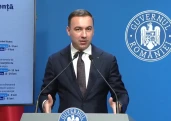
Closed-end alternative investment funds will be able to grant loans to legal entities, the President of the Romanian Association of Fund Administrators (AAF), Horia Gusta, announced on Thursday.
"This stems from a European directive, AIFMD 2 - the Alternative Investment Fund Managers Directive 2. Essentially, this directive allows alternative investment funds to make a broader range of alternative investments. One of these is the possibility to grant loans, but it is not the administrator personally who lends; the administrator does so on behalf of the fund. Thus, alternative investment funds will be able to grant loans, but these cannot be extended to consumers. They are intended primarily for legal entities, not consumers - that is a different area. There are also certain diversification rules. This is broadly what the European legislator has set out, and the directive has been transposed into Romanian legislation. Now, the Financial Supervisory Authority will have to issue secondary regulations by 16 October, setting out the detailed rules: who can lend, how, and under what criteria," Horia Gusta told AGERPRES.
He stressed that only closed-end alternative investment funds will be allowed to grant such loans.
"Let us not forget one thing: not all types of funds are eligible. In principle, closed-end alternative investment funds can grant loans - those where investors cannot exit freely. Other funds may also grant loans, but they must ensure liquidity, because loan repayments are made monthly or quarterly, depending on the case. Fund managers must therefore ensure that, when investors seek redemption, sufficient resources are available in the fund and the money is not tied up in loans. This requires adjustments to be made by administrators, based also on the secondary regulations. The law was published in the Official Journal in December, enters into force on 16 April, and there is a six-month period until 16 October for the authority to issue secondary regulations, without which no one can start lending. October 2026 is therefore the deadline for the authority to issue these regulations, after which the market will have three months to adapt," the AAF president explained.
Gusta also emphasised that granting loans will not be mandatory for investment funds, but merely an option.
"It will not be compulsory. Administrators may choose not to grant loans, but this possibility will exist, whereas it did not until now," he said.
As for the interest rates that will be charged on such loans, the head of the AAF believes they will be higher than those applied by banks, as they are linked to returns.
"Fund administrators will have to carry out credit risk analyses. Probably no one can match bank interest rates, so we are talking about higher returns, because alternative investment fund managers must deliver returns to investors. If interest rates were at bank levels, returns could not be higher. Therefore, I believe interest rates will be somewhat higher," Gusta said.
Law No. 243/2025 amending and supplementing Government Emergency Ordinance No. 32/2012 and Law No. 74/2015 on alternative investment fund managers (AFIA) was published on 30 December 2025.
The Romanian Association of Fund Administrators (AAF) organised on Thursday the conference "The investment funds market in 2026 - expectations and challenge".































Comentează