



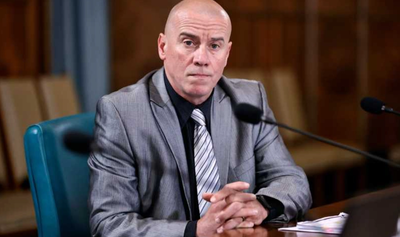


Minister of Culture Andras Istvan Demeter and the Project Management Unit had a working meeting on Tuesday with the delegation of the Council of Europe Development Bank (CEB), with discussions focusing on the implementation status of ongoing projects, the funding absorption rate, and the procurement schedule for design and construction works.
According to a release from the Ministry of Culture, the CEB delegation is in Bucharest on Tuesday and Wednesday as part of a technical monitoring mission.
During the meeting, participants reviewed aspects related to strengthening the administrative capacity of the Project Management Unit, compliance with the preconditions established through the framework loan agreements, updates to the relevant legal framework, challenges encountered during implementation, as well as the solutions and support needed from the CEB.
The minister, together with the Project Management Unit team, reiterated their commitment to the efficient implementation of ongoing projects, to strengthening administrative capacity, and to ensuring full use of the available funds.
He also emphasized the importance of maintaining a constant and constructive technical dialogue with the CEB, as well as the need for flexible financing mechanisms adapted to on-the-ground realities.
The challenges affecting the implementation of large-scale projects were also highlighted: the complexity of approval procedures for historical monuments, rising construction material costs, difficulties related to specialist human resources, and budget constraints generated by recent austerity measures. "In this context, the minister underlined the essential role of the CEB as a long-term, reliable partner capable of supporting the identification of pragmatic and sustainable solutions," the Ministry noted.
Apart from working meetings with the Ministry of Culture and PMU teams, the CEB mission has visits scheduled to the National Museum of Romanian History and the Bucharest National Opera House, both part of the bank's financed project portfolio. These visits aim to assess on-site progress and discuss technical solutions to ensure compliance with the agreed timeline and quality standards.


Founded in 1956, the CEB is the oldest financial institution of the European bloc dedicated to strengthening social cohesion, environmental management, and supporting public infrastructure with a social purpose. Romania has been a member state of the CEB since 1996 and has target country status, benefiting from priority access to advantageous financing for major social-impact projects.
The joint CEB - Ministry of Culture portfolio represents the largest set of bank-financed projects at government level in Romania, with four framework loan agreements aimed at rehabilitating 40 major cultural sites. The total value of these projects, including national co-financing, approaches 900 million euros, confirming the CEB's strategic role in modernizing and protecting Romania's cultural heritage.






















Comentează