



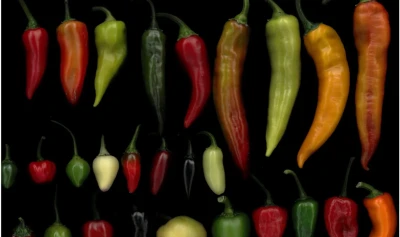


An 18-year-old student from Deva has won a gold medal at the KIDE International Invention Exhibition in Taiwan for a project exploring iodine deficiency in the human body and how it can be addressed at home using chilli peppers grown in an iodine-enriched environment.
Ana-Maria Iordache is an 11th-grade student at Decebal National College in Deva and has been passionate about studying chemistry for many years.
She says the idea for the project came after reading several scientific articles and realising that iodine deficiency is a real global problem.
"At global level there is a very large iodine deficiency, with more than 2.2 billion people affected by this issue. For this international exhibition I carried out a project related to a prophylactic approach to iodine deficiency, in which I studied how iodine biofortification in chilli peppers can be used to combat this global problem," Ana-Maria Iordache told AGERPRES.
In the context of iodine deficiency among the population, the 18-year-old considered that iodised salt used in people's diets has not fully fulfilled its role and began thinking about how this deficit could be compensated.
"I noticed that iodised salt has not achieved its purpose. Even though it is present in 85% of households, it still has not solved the problem. So I thought we could use a method that does not necessarily replace salt, but rather supports it, as a complementary method," says Ana-Maria.

The experiment involved cultivating several varieties of chilli peppers, selected for their widespread dietary use, with iodine introduced directly into the plants during the growth period. The results showed an increase in iodine concentration of up to 850% compared to control plants.
"In this project I took five varieties of chilli pepper and introduced iodine directly into the plant while it was growing. Chilli peppers were used purely from a scientific point of view, in order to measure the level of capsaicinoids as well, which are the molecules that give them their heat. This allowed analysis of that part of the metabolism to see whether the plant is subjected to very high stress during the biofortification process. The results show that biofortification did take place, iodine increased in the plant, in some peppers even by 850% compared to the control, which is very high. We also measured the photosynthetic pigment, namely chlorophyll. We observed that biofortification actually induces an increase, which means photosynthesis takes place much better and is a benefit for the plant at low and medium doses. As for capsaicinoids, here we observe variation between doses and differences from one variety to another, which means we need to be careful and carry out focused studies on different pepper species in order to involve them in agriculture," Ana-Maria Iordache explained.
The young woman plans to continue this study by extending the experiments to tomato crops and by using organic iodine. In addition, plant treatment would include applying iodine to the leaves as well, not only to the soil.
"I hope this study will be completed in the summer. Perhaps it will open the way to new studies through which we can bring this method into practice, because it could change the lives of many people and reduce iodine deficiency to a very low level worldwide," adds the young researcher from Deva.
Ana-Maria Iordache's talent and work are appreciated by the well-known inventor from Deva, Corneliu Birtok Baneasa, who has proposed supporting the young student's efforts through the CorneliuGroup Research and Innovation Association, which he leads.
"It is a very interesting project, which fits very well with market demands and current needs generated by this iodine deficiency worldwide. Ana-Maria focused very strongly on the objective she set herself and had a very good reaction time. Together with her we entered this prestigious international exhibition in Taiwan (KIDE), organised under the auspices of the World Invention Intellectual Property Association (WIIPA). It is an association for innovation and intellectual property that brings together many entities from most countries worldwide under this umbrella, and we are pleased to have a very good collaboration with this organisation," Birtok Baneasa said.
The prize obtained in Taiwan represents, according to Ana-Maria Iordache herself, "a recognition" of the work she has done and a fulfilment, as it allowed her to go beyond the theoretical chemistry problems she solved during her studies.
"This award means more than a recognition of my work. It means that all the chemistry I studied allowed me to create something real, not just solve problems on paper, to apply new methods and come up with an innovation that could change the world, even at a small level. I would very much like to apply this method in agriculture and really bring it into practice. I would like to continue my research at the future university I will attend. To have direct applicability, because ultimately that is the purpose of research. I would like all the research I want to do to move from the theoretical and laboratory experimental side into people's real lives, to tackle a real problem that exists and that we sometimes seem to ignore," Ana-Maria Iordache concluded.























Comentează