



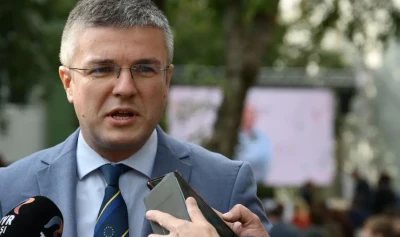


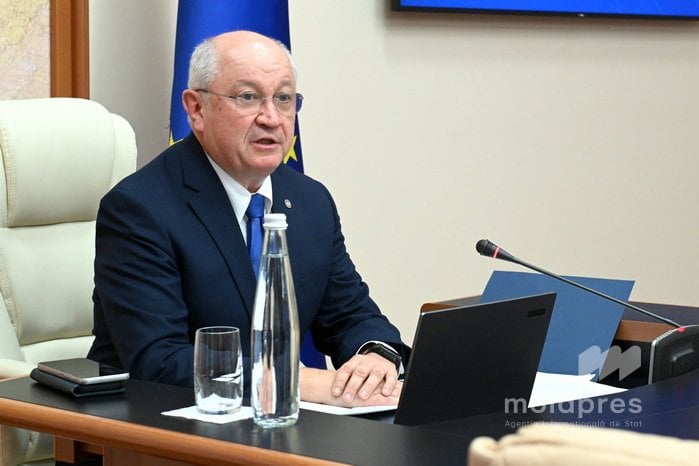
Decisions concerning the future of European competitiveness, the strengthening of the single market, industrial resilience and the directions for research and innovation in the coming years will matter for both the European and Romanian economies, said the Minister of Economy, Digitalisation, Entrepreneurship and Tourism, Irineu Darau.
He attended, on Wednesday and Thursday, the first formal meeting of the EU Competitiveness Council (COMPET), Internal Market and Industry section, organised by the Cypriot Presidency of the Council, as well as meetings held on the sidelines of the Council - 'Friends of Industry' and the Energy-Intensive Industries Alliance - in Brussels, Kingdom of Belgium.
'Romania's representation is carried out with preparation and hard work, but also through a proactive and robust economic diplomacy. The future of European competitiveness, the strengthening of the single market, industrial resilience and the directions for research and innovation in the coming years are on the COMPET agenda. These are decisions that will matter for both the European and Romanian economies. I want a strong Romania within a solid and united European Union. Work and a vision geared towards a sustainable future for our children are needed,' Minister Irineu Darau said, as quoted in a press release from the Ministry on Friday.
The meeting agenda included debates on the Regulation establishing the European Competitiveness Fund, an instrument aimed at supporting the resilience of SMEs and European value chains, the approval of conclusions on the 2030 Consumer Agenda, discussions on the 2026 Annual Report on the Single Market and Competitiveness, as well as on contingency plans for industrial resilience, as a follow-up to the action plans dedicated to Europe's steel, automotive and chemical industries.
On the sidelines of the meeting, the Minister held bilateral talks with counterparts from Member States and working discussions with Romania's team at the Permanent Representation to the European Union.
On the first day of the visit, Darau took part in the 'Friends of Industry' meeting, organised as a continuation of the 2025 event concluded with the Berlin Declaration, which highlighted measures to strengthen the position of European industry in global competition.

In his intervention, the Minister supported the need for a Competitiveness Fund focused on excellence, with fair geographical distribution, reducing gaps between states and regions, and ensuring access for all actors, including SMEs, to innovative technologies and strategic value chains. Darau also underlined the importance of facilitating technology pooling and developing testing environments for innovation.
'For Romania, respecting the principle of technological neutrality is essential, so that all technologies contributing to decarbonisation objectives are eligible for funding,' the same source states.
The minister emphasised the need to reduce critical dependencies on third countries, stimulate production and innovation within the European Union and promote cross-border and interregional partnerships to ensure effective SME participation and the fair distribution of benefits. In the current geopolitical context, Romania considers that the most sensitive strategic dependencies of the European Union concern raw materials and technologies.
'In the field of critical raw materials, dependence on single suppliers, particularly for lithium, cobalt, graphite and rare earths, affects the battery, renewable energy and defence industries. It is necessary to accelerate European extraction, processing and recycling projects through the coordinated mobilisation of European Union, EIB and EBRD funding, and by establishing a dedicated mechanism for strategic projects,' the press release also states.
Regarding the 2026 Annual Report, debates confirmed the role of the single market as a pillar of European prosperity and an instrument of economic resilience. At the same time, the slow pace of internal integration, persistent barriers, insufficient investment in innovation and external pressures were highlighted, calling for coordinated action at both European and national level to strengthen long-term competitiveness.












Comentează