



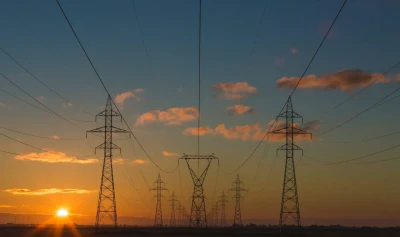


Some of the current difficulties in the energy sector could have been reduced if substantial investments had been made in recent years in strengthening and expanding distribution networks, said Lorant Antal, chair of the Senate Committee on Energy, Energy Infrastructure and Mineral Resources, on Monday, at the launch of a new study conducted by ASC Xlaed Business Hub SRL.
The "Study on the evolution, regulatory framework and impact of prosumers on Romania's energy system" was unveiled by the Romanian Energy Suppliers Association (AFEER).
"Many of the problems we face today stem from the fact that, over the past three decades, distribution companies, unfortunately, have not kept pace with economic development. This means that, especially in the natural gas sector, we are underdeveloped, as only 40 - 45% of Romania is connected to the gas network, and in the electricity network we also have many issues," Antal said.
In his view, the energy sector is now forced to recover historical delays while simultaneously integrating new production capacities and adapting to the energy transition.
"We must respond to today's challenges while also having the capacity to plan for the future. I believe this is an enormous challenge," he pointed out.
He stressed that part of the current difficulties could have been avoided with stronger investment in distribution infrastructure.
"If, in the last 15 years, that billion euros had been spent on new electricity networks, perhaps today we would be facing different challenges, or fewer of the ones we currently have," Antal said.
According to the study, Romania has recorded one of the fastest increases in the number of prosumers in Europe.
"From 303 prosumers in 2019, the number reached nearly 300,000 at the beginning of 2026. Installed capacity grew from less than 5 MW to around 3,400 MW by the end of 2025, and annual production reached about 4.5 TWh, roughly 9% of Romania's total electricity output," the study's authors note.


With average annual growth rates above 200% between 2022 and 2024, Romania has outpaced mature markets such as Germany, Spain and Italy.
The study also shows that the current regulatory model generates additional costs for suppliers and network operators, which are passed on - directly or indirectly - to non-prosumer consumers. Estimates indicate an annual impact of tens of millions of euros for 2024, with a rising trend proportional to the number of prosumers connected.
























Comentează