



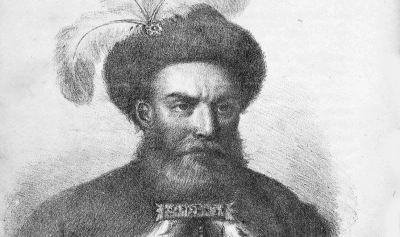


The Brancovenesc Palace Ensemble in Potlogi is a place where history comes back to life, a true architectural jewel of Dambovita County. Visitors who admire the beauty of the palace can also discover what the ruler's apartments looked like, what valuables were kept in secret chambers, why food reached the prince cold and why Constantin Brancoveanu brought French gardeners here.
"Constantin Brancoveanu built several palaces in Dambovita County, including the one at Potlogi and another at Doicesti. At present, visitors can explore the Potlogi Palace along with its courtyard and gardens," museum curator Irina Cirstina from the Targoviste Princely Court National Complex told AGERPRES.
The estate covers around 30,000 square metres, featuring guard buildings at the entrance, a separate kitchen building and an imposing honour courtyard leading to the palace, with gardens stretching behind it.
Visitors can see exhibits from the Brancovenesc and post-Brancovenesc periods, creating the impression of stepping back in time. Most importantly, they can learn in detail how people lived in that era and how the entire household was organised.
"The most interesting exhibits are those displayed inside the palace. These are items from the collections of the Princely Court National Museum Complex, which oversees several museums, including the Potlogi Palace. They include jewellery, ceramics, vessels, old books and other pieces from the museum's collections. It must be said that no objects from Brancoveanu's time have been preserved in the palace, as it was soon devastated. It deteriorated significantly and at one point even lost its roof, and although it was later restored and saved, it was not brought back to its original splendour. Only in 2015 can we say that we returned to Brancoveanu's time, and now we have on display pieces from the Brancovenesc and post-Brancovenesc periods, including coins, exhibited in a room, "tainita" as it was called at the time, where valuables were kept,' Cirstina added.
The description of the the steward's room shows that not only saddles, swords and pistols were stored there, but also goods locked in chests: carpets, fine clothing, precious icons and silverware.
The palace also featured a secret passage. "In the floor of the room there was a hidden trapdoor leading to the secret chamber between the two levels of the palace, where the most valuable objects were kept," the description of the cellar room further notes.


Visitors can also learn about dining customs at the princely court. Meals were served in a large hall where guests sat on benches rather than chairs, using silver cutlery. According to historical accounts, meals could last from the afternoon until dawn. Food often arrived cold because the kitchen was located in a separate building, at a considerable distance from the palace, due to fears of fire.
"The Italian chronicler Anton Maria Del Chiaro tells us there were benches and describes the dishes served. He even complained that the food arrived cold, precisely because the kitchen was separate from the palace," Irina Cirstina explained.
At Prince Brancoveanu's feasts, the finest liqueurs available in Europe were served, while dairy products featured in the daily diet and fish and meat were typically prepared with bran-based bors and vinegar.
"Sweet leeks, kohlrabi, fresh and pickled cabbage were also staple foods, alongside fish and roe, either fresh or prepared by salting and crushing, with olive oil, pepper and lemon juice (...) Brancoveanu was contemporary with the first maize crops in Wallachia, and imported goods included oranges, pomegranates, olives, almonds, pepper, noodles, cinnamon and cloves,' the description of the dining hall states, adding that the favourite dessert was cozonac, "made with flour, milk, Venetian sugar and egg yolks".
The restored palace also includes reconstructed rooms for the prince and his wife, illustrating both administrative and domestic life at court.
"Visitors can see a lady's room, where feminine objects, artworks, clasps and rings are displayed, everything that reflects feminine elegance, but also a room of the ruler. Because, ultimately, there was a section dedicated to the ruler and another dedicated to the lady. This allows us to understand what the ruler's apartment looked like, which was also the administrative area where the princely chancery was located," the museum curator further explains.
The building deteriorated significantly over the past century, but the 2015 restoration restored much of its former beauty. Special attention was also given to the palace gardens, which had been neglected for many years.
"Constantin Brancoveanu greatly valued these natural elements, and all the constructions he built were set within gardens, with water features, well-maintained landscapes and French gardeners who were skilled in cultivating species that enhanced the beauty and splendour of the place, through the combination of natural and architectural elements. We are in a beautiful place that we hope as many Romanians as possible will come to discover," curator Irina Cirstina said.
In the gardens, fruit trees brought from the Voinesti Fruit-Growing Station in Dambovita County have been planted, along with golden oaks and other tree species from a local nursery. In spring, in front of the main building, blooms the only Dutch tulip with a Romanian name: the 'Doamna Maria Brancoveanu' ('Lady Maria Brancoveanu') tulip. The bulbs were donated by the Association of Orthodox Women from the Saint Gregory the Theologian parish in the Netherlands. The tulip is registered in the catalogue of the Royal General Bulb Growers' Association of the Netherlands. The 'Doamna Maria Brancoveanu' tulip is red with a golden edge resembling a crown and grows up to 50 centimetres tall.
Located about 50 kilometres from Bucharest, the Potlogi Palace is attracting an increasing number of visitors, though many are still unaware of this architectural gem that offers a vivid glimpse into life during the Prince Constantin Brancoveanu.

























Comentează