



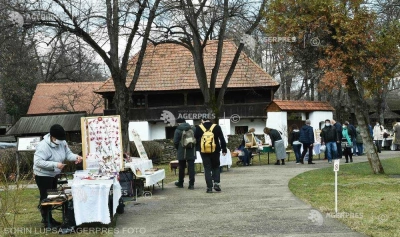


For many visitors, the Banat Village Museum in Timisoara is a place that evokes childhood summers spent in grandparents' country homes, the museum housing more than 13,000 heritage objects some dating back to the 18th century grouped into four major collections: textiles, icons, woodcraft, and ceramics.
Over the years, however, the museum has suffered significant losses. Several valuable heritage monuments have been destroyed, and some of the objects still in its care are extremely fragile, damaged, and in need of special conservation measures.
Director Radu Trifan says the institution's three greatest losses were the wooden church from Topla once located at the heart of the museum and destroyed in a fire on March 25, 2025, though now undergoing restoration, the Slatina Nera homestead, and the windmill, both of which were damaged and eventually lost during a difficult period in the museum's history.
"Our most beautiful heritage monument was destroyed by fire the wooden church from Topla, built in 1746 in Remetea Lunca (Faget) and donated in 1807 to the faithful of Topla village. It was transported on rollers, pulled by 24 pairs of oxen, then reassembled and reinforced with the help of the parishioners. It had architectural features that made it the most valuable wooden church in Banat. The shingle roof burned completely, and the bell tower, which stood separately, was also lost. The walls were made of thick oak beams, and that proved to be its saving grace: they burned only two to three centimeters deep, meaning the church can be restored. The entire iconostasis was destroyed, however. Fortunately, all valuable icons and liturgical objects had already been removed for conservation and restoration, so they were spared. Even the church vault, with its painted decoration, had been dismantled in 2001 for restoration and is safely stored. The original icons and sacred objects are intact in storage; the ones inside the church at the time were newer replacements,"Trifan explained for AGERPRES.
Museum curator Catalin Balaci explained that the wooden church was dismantled in Topla in 1987, moved to the Banat Village Museum, and reassembled between 1994 and 1996. Commenting on the 2025 fire, he warned of the risks of using heritage monuments daily as if they were ordinary buildings. Although restoration has begun and can faithfully reconstruct the structure, he stressed that some of its historical, cultural, and emotional value is inevitably lost. The blaze, caused by an electrical panel outside the church, underscores how vulnerable ethnographic monuments are when subjected to constant use like a clay pot that eventually breaks with daily wear.

Balaci also noted that the museum faced public pressure to keep the church open. The surrounding neighborhood has a parish but no church of its own, and attendance grew significantly over the years from just three people at a service in 2004 to dozens, sometimes nearly 100, in the past decade. Many visitors were drawn to the museum specifically because of the church, whose charm made it one of its main attractions.
The museum has experienced other losses as well. During the period when it was closed between 1987 and 1994 ostensibly for conservation, though curators say there were plans to dismantle the collection and divide it between Bucharest and Sibiu many objects were damaged as visitors entered houses and homesteads unsupervised.
At that time, the Slatina Nera homestead deteriorated beyond repair and was scrapped in 2001. The windmill also disappeared; there are no surviving documents recording when it was dismantled.
Catalin Balaci explains that some of the museum's most vulnerable items are extremely old textiles, which must be kept in strictly controlled environments to preserve their color and texture.
"They are made from biodegradable materials hemp, wool. If not kept properly, they deteriorate quickly. We constantly monitor them and intervene when necessary. That is the work of the curator, the conservator, the restorer the museum itself. One of our core missions is preservation. If objects are lost, it means we have failed in our duty," he added.
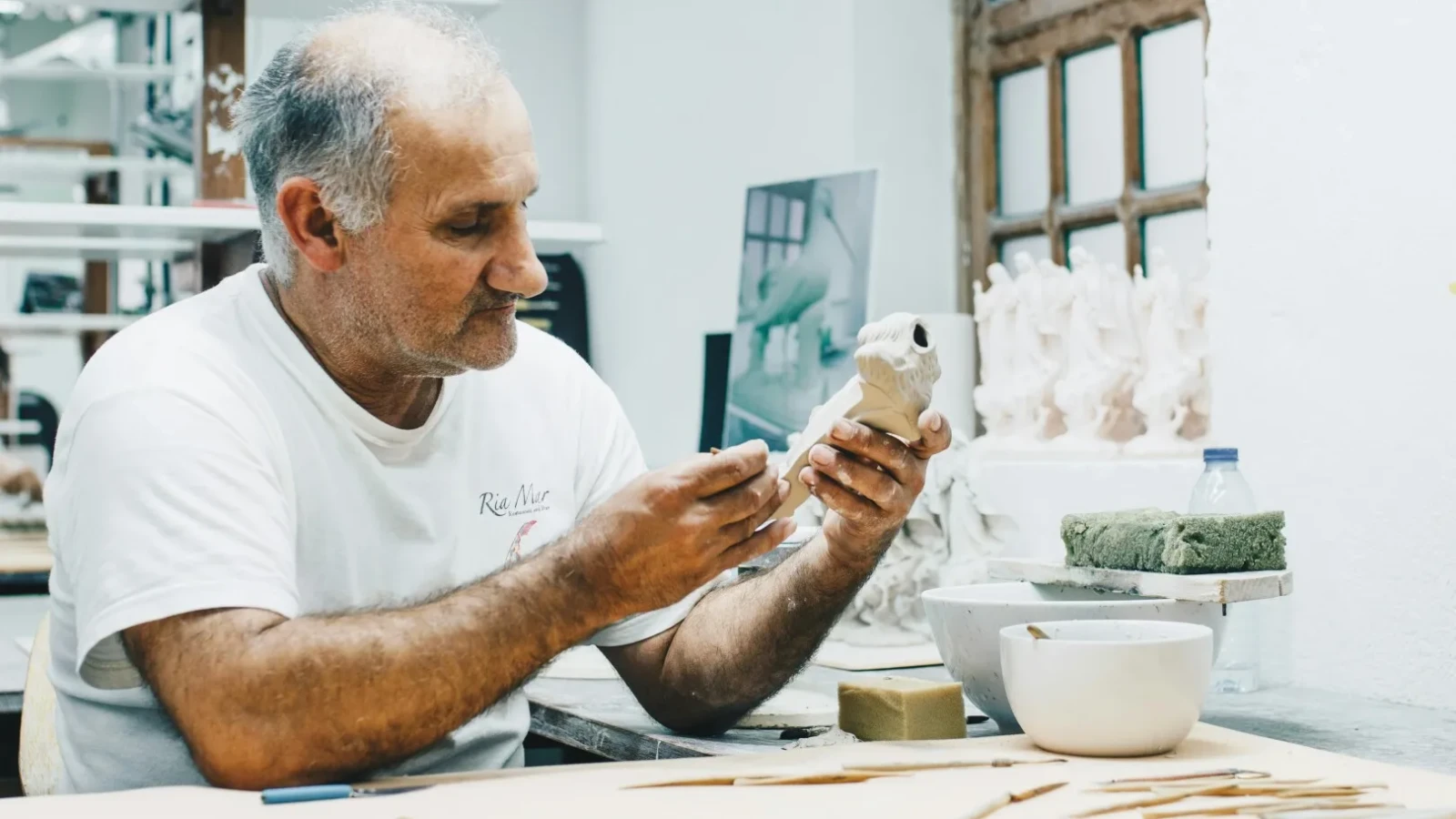
Descending into the museum's storage facilities feels like stepping into a fairytale world: wooden dowry chests in natural tones or painted with floral motifs; vast rooms lined with orderly metal shelves and drawers, like a library. Inside are thousands of textiles brocades, lace, embroidery, aprons, blouses, sheepskin vests, belts, shirts, trousers carefully stored. After serving at dances, weddings, gatherings, and church services, they now rest. Some, still vibrant in color, seem ready to leap back into festive life.
"These are preserved in excellent condition. We rotate them occasionally for display, but never for long. If you expose them daily, people touch them, and that causes damage. Here we have, by category, items related to traditional dress: textiles, garments, short sheepskin coats (?ube scurte), small fur vests (cojocele), sleeveless wool or sheepskin vests (ilicuri), traditional white woolen trousers (cioareci), ritual or decorative towels (stergare), wall hangings (paretare), tablecloths (fete de masa), decorative table covers (masaie), and long decorative textiles used for interior adornment (fereanguri).We also house wooden objects flutes, clubs, distaffs, even a wooden washing machine once used with lye to clean laundry alongside traditional masks and headpieces. In another section are icons from the early 1700s, wrapped in special protective sheets. The oldest icon depicts Saint Nicholas, the beloved patron saint of homes in Caras, now carefully stored in a metal drawer," the curator explained.
Specialized staff maintain the objects using anti-mold treatments and fine needles and thread to mend fragile fabrics by hand. Over-dried textiles are rehydrated in controlled humidity before restoration. Many arrive riddled with moth damage.
As for the stories behind the treasures, restorers say documentation varies, and they usually know the provenance whether purchased, transferred, or part of an older collection but not the full history of each object. Occasionally, when undoing old seams or linings, they discover surprises: notes, handkerchiefs, small personal traces.
Of the 13,000 items, roughly 2,000-2,300 belong to a "very old" collection with limited documentation, predating even the establishment of the Banat Museum.
The museum's main attraction is the Civic Center of the Village, conceived as a living space of cultural and social life. It includes the 18th-century Town Hall from Sarazani, the National House from Babsa (1927), the Timisoara customs building (19th century), the school and inn from Bârna, and the wooden church from Topla. Between 1992 and 1994, several homesteads from Bata, Birchis, Capalnas, Jupanesti, Zolt, and partly Jebel were restored, and the Civic Center was completed.
Director Radu Trifan notes that the rise of antique dealers has driven up prices for historic houses and farmsteads, making acquisitions increasingly difficult. He hopes to secure an annual acquisition budget of up to 50,000 lei to fill gaps in the collection. High on the list is a traditional brandy still, as well as brick and stone homesteads now being demolished.
"Most houses in the museum are wooden, but in Banat wood is no longer representative. The region was prosperous; people built large brick homes. Our challenge is to bring brick houses here as well dismantled brick by brick, transported, and reconstructed according to the original plans. We are planning to acquire a 200-year-old border guard house from Valea Almajului. It must be purchased, as the owners will not donate it. The railway station in Ionel village is set to be demolished; we have requested a historic house from Jabar from the national railway company, which will be donated. We would also like to relocate a seasonal shepherd's shelter from Rudaria. In Caras there are small, old wooden churches no longer in use, but those belong to the Metropolitanate of Banat," Trifan said.
Through the cultural heritage it preserves and presents, the Banat Village Museum remains an open page in the history of Banat a testimony to the traditional rural civilization of Romanians and the national minorities of the province, and a space of harmonious interethnic dialogue.


























Comentează