



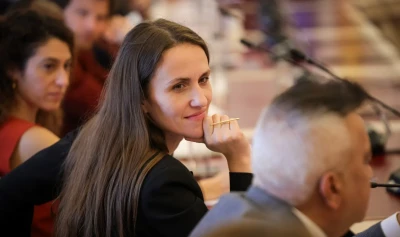


Romania has a consistent position that Russian troops in Transnistria must be withdrawn, this has been our position for many years and we obviously support the fact that it has also become a European position, Foreign Minister Oana Toiu said ahead of the Foreign Affairs Council (FAC) meeting.
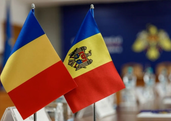
'We have had conversations with President Maia Sandu and with the Moldovan government and we also consider encouraging the use of Transnistria in the sense that, at this moment, citizens can have hope for a European future. (...) Therefore, we see that there is a way to integrate the region, but obviously Russian troops must withdraw from there,' the Romanian foreign minister said.
Toiu also referred to the situation in Georgia, a country with which Romania has a strategic partnership. The Romanian minister expressed Bucharest's support for the aspirations of Georgian citizens for a European future. She said, however, that all aspects concerning the legal proceedings initiated against opposition leaders need to be clarified.
'Europe must be involved in the discussions, especially if we refer not only to the investments we have made in security in recent years, but also to our own security which is directly linked to how the peace talks unfold. What is very important for the European Union and for Romania is that there should be not only a temporary ceasefire, but also conditions to prevent future aggression, especially for Romania. We pay great attention to discussions related to the Black Sea and the damage in the Black Sea and that is why we coordinate with countries in the European Union, as well as with Black Sea littoral states, in order to be able to have a common official proposal,' the Romanian foreign minister also said.
The foreign ministers of the European Union member states, meeting on Monday in Brussels, are trying to adopt the 20th package of EU sanctions against Russia, after the ambassadors of the member states failed last week to reach an agreement on the matter.


This objective, reaffirmed by EU High Representative for Foreign Affairs and Security Policy Kaja Kallas just before the FAC meeting, appears difficult to achieve on Monday after on Sunday Hungarian Foreign Minister Peter Szijjarto announced that his country would block a decision in this regard on the grounds that Ukraine had blocked the transit of Russian oil to Hungary through the Druzhba pipeline.
So far the EU has imposed 19 packages of individual and economic sanctions on Russia, as well as diplomatic measures and visa restrictions. Adopted on 23 October last year, the 19th package of sanctions included a ban on imports of liquefied natural gas from Russia, a port access ban for several vessels from Putin's shadow fleet and a ban on transactions with other banks as well.
EU sanctions are temporary and carefully targeted, designed to be proportionate, which means they are periodically reviewed and that the European Union can calibrate, reduce or lift them if EU objectives are met or significant steps are taken towards them. The EU's restrictive measures in response to actions undermining or threatening the territorial integrity, sovereignty and independence of Ukraine apply in total to more than 2,700 individuals and entities.













Comentează