



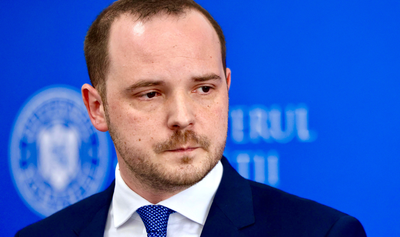


Minister of Health Alexandru Rogobete and head of the Department for Emergency Situations Raed Arafat met on Monday with Health Emergency Preparedness and Response Authority (HERA) Director-General Florika Fink-Hooijer, to discuss how Romania can strengthen its capacity for preparedness and response in health crisis situations, as well as the instruments through which European cooperation can support this process.
"There is still significant pressure on emergency reception units in our health system. Many patients arrive there with problems that could be solved in outpatient care, and this affects hospitals' ability to respond quickly when truly critical cases arise. In preparing for crisis situations we need organisation, clear protocols and the system's capacity to function under pressure. In critical situations, every minute counts. Intensive care must be ready for the patient, not the patient waiting for intensive care," the Health minister wrote on Facebook.
Rogobete discussed with the HERA team the development of preparedness models for emergency medicine and intensive care, exchanges of expertise and know-how, as well as how Romania can better make use of European mechanisms dedicated to preparedness for health crises.
According to the minister, cooperation between intervention structures and the health system is essential when it comes to a state's capacity to respond effectively in emergency situations.
"A state may have well-organised intervention mechanisms, it may have a strong army and civil protection structures, but without a solid health system the real capacity to respond remains limited. HERA was created precisely to strengthen this dimension at European level, through the development of partnerships and by supporting projects that increase the ability of health systems to respond to health crises. Crises cannot always be avoided. But a prepared health system completely changes the way we respond to them," Alexandru Rogobete also said.











Comentează