






IMM Romania SME Employers' Confederation on Thursday came up with an economic recovery program for Small and Medium-sized Enterprises (SMEs) consisting of 11 funding programmes to support micro-enterprises, which it considers mandatory for the third package of reforms to be passed by the Bolojan Government.
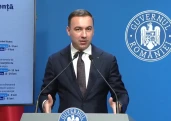
"The programmes appeared publicly, being taken over to various government programmes, in electoral campaigns, when the government was inaugurated or when politicians presented suggestions to support it to the business community," SME Romania Chairman Florin Jianu told a news conference, agerpres reports.
The programmes to support SMEs are SME INVEST - guarantees of up to 90% of the value of loans for investments and working capital, number of estimated beneficiaries - 50,000; guaranteed funding cannot exceed RON 10 million /beneficiary; SME Prosumer - production of electricity of less than 400 kW for own consumption and storage, grants of maximum of EUR 200,000, with an own contribution of 30%, estimated beneficiaries: 10,000 SMEs; Green Energy generation - support for the production of photovoltaic panels, electric batteries for storage and electric cars, wind turbines, state aid of maximum EUR 50 million/company, for an own contribution of EUR 5 million (10%), for greenfield investments, estimated number of beneficiaries being 6; SCALE-UP - support for SMEs with a minimum of 10 years of experience for the increase of industrial production, state aid capped at EUR 1,000,000 for SMEs that have fully paid their taxes, with anestimated number of beneficiaries of 2,000 SMEs.
The following programmes are also suggested: Start-Up Revolution - 500 funded start-ups / county, total approximately 20,500 start-ups in two years, Start-up Garant loans under the FNGCIMM guarantee fund for SMEs; Romania Scale Up Fund - launching at least 4 equity funds for scaling businesses; Digital SME - vouchers for the purchase of micro-enterprise digitalisation packages, number of beneficiaries - 5,000 micro-enterprises/year, 20,000 in 4 years, subsidy value of EUR 5,000 /beneficiary; Student First Company - number of beneficiaries of one thousand start-ups annually/4,000 start-ups in 4 years, subsidy value of EUR 50,000/beneficiary.
In addition, the following programmes should also be covered: Export Romania - support for funding companies entering new markets, extending grants for preparing business for internationalisation, number of beneficiaries - 2,000 SMEs, subsidy value of EUR 10,000/beneficiary; Professional Romania - granting vouchers in order to the training and retraining of employees, between EUR 100 - 800 euros, number of beneficiaries - 10,000 people/year; Women In Tech - number of beneficiaries - 1,000 SMEs annually / 4,000 SMEs in 4 years, subsidy value: EUR 50,000 /beneficiary.


IMM Romania also put forth measures that do not require a financial component: easing administrative burdens (any piece of legislation that introduces new reporting or compliance obligations should suggest the repeal of at least two other obligations), de-bureaucratisation (elimination of unnecessary bureaucratic procedures), simplification (unification of entities that request and collect various taxes), taxation of unregistered providers and repealing unfair competition.
According to the confederation, approving support measures for entrepreneurs means a competitive business environment capable of facing competition in a market where products and services from the Mercosur area will enter and, most likely, in the future from India and Australia, countries with which the EU wants to conclude free trade agreements.
Jianu added that the need for funding under these programmes was assessed by SME Romania to be between RON 5 and RON 10 billion, "if we take into account what SME Invest meant, which annually had a budget between RON 10 and RON13 billion lei and which was exhausted".
According to the employers' confederation, the government measures under Package 1 and 2 have increased taxation and costs for the business community, with the impact being felt throughout the Romanian economy (80% of enterprises say that they have been affected) plus a surge in electricity prices by 60.91% in December 2025 from December 2024 and an annual inflation of 9.7%, according to the December 2025 official statistics on inflation and the evolution of consumer prices.






















Comentează