



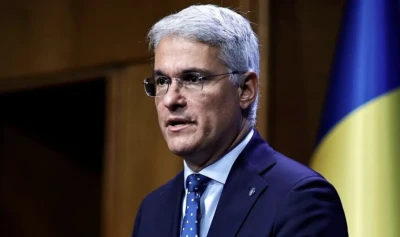


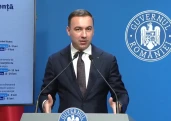
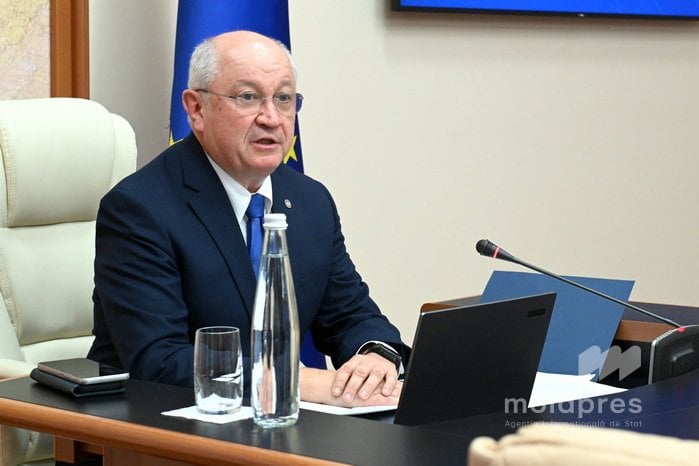
In the last six months, European money has started to flow into the economy five times faster and mechanisms that seemed frozen have been set in motion, according to the Minister of Investments and European Projects, Dragos Pislaru.
"The data from December 31 show that, when we work professionally, a few months can make up for a few years. The figures are not boastful, but they tell a necessary truth: we have managed to set in motion mechanisms that seemed frozen. In the last 6 months, European money has started to flow into the economy five times faster," the minister wrote on his Facebook account on Monday.
He stressed that, as regards cohesion, the comparative analysis of the data highlights "a massive and unprecedented acceleration" of the absorption process in the last 6 months, compared to the entire period since the beginning of the 2021-2027 financial year (1 January 2021 - 23 June 2025). At the current uptake rate (amounts requested from the European Commission) the performance "is even more remarkable", from 3 billion (9.91%) reaching 6.3 billion euros (20.4%), which means a doubling of absorption in the last 6 months.
"For skeptics, even at the effective uptake rate (reimbursements from the European Commission) we found 2.9 billion, i.e. 9.41% (accumulated in 4 and a half years) and we managed to bring it to 5.2 billion, i.e. 16.6% in just 6 months. That is 2.3 billion euros entered the state's accounts during this period," the minister of Investments and European Projects said.
According to the data made public by him, during the period January 2021 - June 2025 (54 months) an average of 86.6 million euros were paid per month, and during the period June 2025 - December 2025 (6 months) the pace increased to 456.2 million euros per month.


Also, the capacity to bring money back to the state budget has increased exponentially, in the previous period the average was approximately 54 million euros per month, and in the current mandate it has jumped to 374 million euros per month, which means that the repayment rate has increased almost 7 times.
As to the National Recovery and Resilience Plan, the minister indicated that in June 2025 it was at a critical point. Negotiations with the European Commission were blocked, there was a suspended payment request and "a total mess" in implementation, with "uncountable" overcontracting and culminating in a total lack of transparency and management tools to keep things under control.
He added that the target for 2026 is to double the historical maximum of attracting European funds, a minimum of 15 billion euros to be spent on key investments in hospitals, schools, highways, local infrastructure and economic competitiveness.
















Comentează