



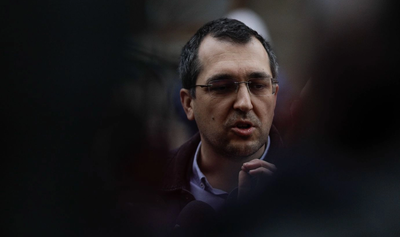


AGERPRES special correspondent Florin Stefan reports: MEP Vlad Voiculescu (Save Romania Union - USR) believes that the president of the European Commission, Ursula von der Leyen, should have made public the messages with Pfizer CEO Albert Bourla, the main thing she was criticized for in the motion of censure filed against the European Commission and on which the European Parliament will rule on Thursday.
Voiculescu, who was minister of health during the COVID-19 pandemic, said, on the other hand, that "it is always easy to judge coldly a solution that someone had to find when things were very hot".
"I don't know if every negotiation should be conducted with a minutes next to it, it can be discussed whether there should have been discussions on WhatsApp, on SMS, I don't know how they carried them out, but basically, (...) what do you have at the end of these steps, which are almost natural in a negotiation, it is a contract. And was that contract well negotiated? Was it transparent at least to those who had to make the decision, I think that is the fundamental question," said Vlad Voiculescu in a briefing for Romanian journalists.
Asked whether Ursula von der Leyen was telling the truth when she told the EP plenary on Monday evening that "anyone who claims they were not aware of the contract (for the acquisition of anti-COVID vaccines) is lying," he said yes.
"I tell you honestly that I saw the contract in the DNA [National Anticorruption Directorate] file. The contract for vaccines was known to the prime minister and, respectively, the person designated by the Romanian state in that committee, which was made up of one representative from each state. But there was a representative of Romania, an employee of the Ministry of National Defense, of the Cantacuzino Institute, who was appointed by the Romanian Government," Voiculescu said.

Former health minister Vlad Voiculescu has been prosecuted since December 2023 in the anti-COVID vaccine case, along with Ioana Mihaila, former USR minister of health, and former prime minister Florin Citu.
He said that it is debatable whether it was normal for only the prime minister to have access to the contract.
"The Romanian government had access through the prime minister, that's all. It's not natural, from my point of view, it can be discussed whether the decisions should have been made in the government. But yes, the Romanian prime minister, certainly the president, had access to the contract, they could decide what quantities to buy and nothing was imposed from the European level," he explained.
"In other parts it was different, in other countries it was either the health minister or a person appointed from outside the government, who reported further," explained the USR MEP.



















Comentează