



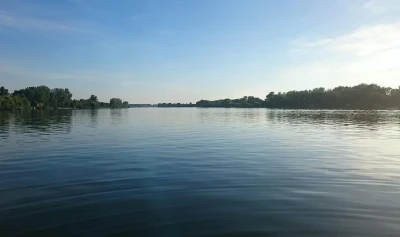


Water quality indicators monitored downstream of two barges carrying agricultural fertilizers that sank in the Danube - near Zimnicea and offshore Giurgiu, respectively - show no significant deviations, the 'Romanian Waters' National Administration (ANAR) said in a release on Tuesday.
"Continuous monitoring confirms no major changes in water quality parameters, no fish mortality, and no impact on downstream water intakes located more than 100 kilometers away. All water users are notified if laboratory analyses reveal variations in monitored indicators," ANAR specialists stated.
On January 9, 2026, Zimnicea port authorities reported the sinking of a barge loaded with ammonium nitrate-based fertilizer, previously stranded on a sandbar. A second vessel, carrying potassium chloride, was reported in a similar condition downstream near Giurgiu. Both were transporting common agricultural fertilizers, not industrial toxic substances.
Authorities intervened immediately. On January 9, representatives of ANAR and the National Environmental Guard conducted on-site inspections. The following day, water samples were collected upstream, adjacent to the vessels, and downstream, including 10 km away. Analyses targeted physico-chemical parameters relevant to fertilizer pollution: pH, electrical conductivity, ammonium, nitrates, nitrites, phosphates, calcium, magnesium, chlorides, and potassium, ANAR specified.
Results indicated a localized increase in ammonium concentration at Zimnicea, bit it was fully diluted within a few kilometers due to natural dispersion. No exceedances of quality thresholds were recorded. Drinking water catchments in the Chiciu area, Calarasi County, remain unaffected. Daily monitoring continues at three points - upstream, downstream, and at the wreck sites - by the Arges-Vedea Water Basin Administration through the Teleorman and Giurgiu Water Management Systems.


In parallel, the Lower Danube River Administration is coordinating refloating operations, which involve sealing hull breaches, draining water, and deploying lifting systems. If refloating proves unsafe, the wrecks will be dismantled on site and transported to a shipyard.
ANAR stressed that under current legislation, the polluter is required to report pollution incidents, implement remediation measures, and bear all costs of intervention, depollution, and restoration, subject to verification by competent authorities.




























Comentează