



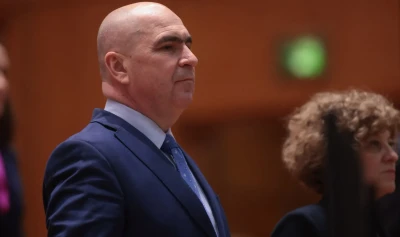


Prime Minister Ilie Bolojan stated that property taxes should have been increased three years ago, in line with commitments under the National Recovery and Resilience Plan (PNRR).
He also told Digi FM that coalition parties are expected to decide in the coming days on whether to reduce or eliminate the minimum turnover tax (IMCA).
"We have a gap of 150 billion lei between revenues and expenditures in a year. That is, we need to borrow 30 billion euros, for which we pay 12 billion euros in interest annually, not just on new borrowing, but also on previous debt. If we do not reduce these expenditures, if we do not increase the country's credibility, we cannot lower either the total cost of interest or the interest burden as a whole. (...) I am being criticised now because property taxes will rise from 1 January, but this should have been done three years ago; it was a PNRR commitment," the prime minister said.
He emphasised that infrastructure investments require contributions to local budgets from citizens.
"Any citizen benefiting from current infrastructure works across Romania - whether expanded water and sewage networks, resurfaced roads, or improved local services - must recognise their responsibility to contribute through this tax, ensuring these projects can be co-financed. There are no alternative sources of funding. Those enjoying better access to their homes, lit or paved streets, or enhanced local healthcare must contribute, but this obligation should be communicated honestly to citizens, not framed as a populist drama.," Ilie Bolojan said.
He stressed that all future governments will need to adhere to the trend of reducing deficits, as Romania is committed to reaching a 3% deficit by 2030.
"This year, interest payments alone amount to 3% of GDP. Next year, we aim to reduce the maximum deficit to 6.4%, down from 8.4% at the end of this year. That is a two percentage point reduction, which is not easy, because it requires strict budgetary discipline, reducing operating expenses, collecting taxes, and creating conditions for development. The measures we adopt at the end of this year and at the start of next, in January before the budget is approved, must both maintain financial discipline, cut expenditures, and create conditions to support economic recovery in certain sectors," he explained.
Bolojan also noted that the minimum turnover tax (IMCA) has affected the level of foreign investment in Romania, and the coalition will discuss its possible reduction or removal.
"One of the taxes introduced in recent years was the 1% turnover tax, IMCA, which impacted large companies. One effect was that foreign investment in Romania was halved. (...) Instead of taxing profits, we are effectively taxing turnover, and in sectors with low earnings and profit margins, this creates a lot of problems. We need to limit transfer pricing to prevent companies from reducing profits and consider eliminating or reducing this tax. (...) In the coming days, we need to reach agreement within the coalition. Over the past three weeks, representatives of the four parties have been discussing solutions, and we will present one in the coming days," Prime Minister Bolojan further said.



















Comentează