





The development of complementary private insurance is essential to improve patients' access to healthcare services, both in the public and private systems, and to ease pressure on hospital medical assistance, Alexandru Rafila, chairman of the Health Committee of the Chamber of Deputies, said on Tuesday.
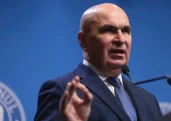
"Without the development of a private insurance system, complementary or supplemental, as the case may be, we will not be able to discuss access of patients to public and private healthcare services, because the private insurer can complete the basic insurance package that exists at the moment, in a similar way for the public system and for the private system. Specialised outpatient services are still underfunded, and we reach a situation that is paradoxical: we are talking on the one hand about the need to shift the burden from hospital to outpatient healthcare, but these services do not get adequate funding. We managed to increase the point value at some point, but not enough. I believe that this healthcare corps, which represents 10,000 doctors, the vast majority of whom are private service providers, must be able to qualify for funding that will ease pressure and also the need for additional funds in the area of hospital medical assistance. That is happening everywhere in Europe, all over the world. The costs of hospital healthcare are very high, and technological development, on the other hand, allows outpatient treatment, including through daytime hospitalisation, in such services," Rafila told the official launch of the Federation of Healthcare Entrepreneurs' Employers (FEPAM).
On the other hand, he added that out-of-pocket payment for certain private medical services is high, burdensome, with Romania being "in a danger zone" from that point of view.
"I have something to say that may not necessarily be liked by some of those who are here in the room, but it is realistic. The patient's out-of-pocket expenses for certain private healthcare services is very often difficult to quantify, it is high, it is burdensome because Romania is in a danger zone. This out-of-pocket money, the money that the patient pays for healthcare in Romania, reaches 30%, which is a lot, it brings us to a danger zone. According to the World Health Organization, the comfort zone is between 15 and 20%, between 20 and 30% is the intermediate zone. We are already in the area where people pay too much and become economically and socially vulnerable if they pay too much out of their pockets. We have the private insurance that must come," Rafila added.
In his opinion, co-payment should be capped.
"I personally know some private operators that offer oncology services, they do not ask their patients for any co-payment, they have very good quality services in the private sector - and that must be said, it must be acknowledged, and I think it is extremely important as a model of good practice. However, there must also be a level of reimbursement that is reasonable in terms of covering the costs of treating patients," added the chairman of the Health Committee of the Chamber of Deputies.
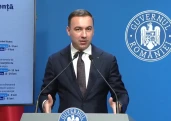
The Federation of Healthcare Entrepreneurs' Employers (FEPAM) on Tuesday held a news conference on its official launch, which was attended by representatives of central public administration and healthcare specialists.
According to organisers, FEPAM is a national employers' organisation that brings together over 400 members from Romania's the private healthcare sector. It is a member of the National Confederation for Women's Entrepreneurship (CONAF).
























Comentează