



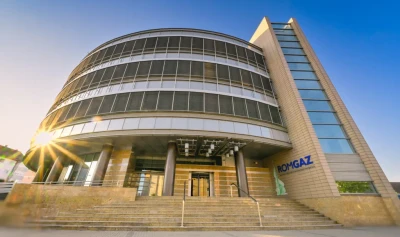


Romgaz has every interest in keeping natural gas in the pipelines, so as to utilize it, and has no reason to release it into the atmosphere, as is often stated, Romgaz's general manager, Razvan Popescu, said on Tuesday at a specialized debate.
"I assure you of Romgaz's full responsibility as a gas producer and we assure you that we have every interest in keeping natural gas in the pipelines, so that we can capitalize on it. We do not have the slightest interest in releasing it into the atmosphere, as is often stated, unfortunately! We demonstrate maximum seriousness by the way we have managed to organize ourselves since the entry into force of EU Regulation 2024/1787 on the reduction of methane emissions in the energy sector," stated the company's general manager.
He mentioned that Romgaz is the largest natural gas producer in the country.
"Currently, we are the largest gas producer in the country. We operate 131 structures nationwide, 133 compression units, allocated and geographically spread across approximately 40 different locations. We also operate almost 3,000 gas production wells and approximately 55 gas drying stations, respectively almost 3,200 km of adoption pipelines and gas collector pipelines," emphasized Razvan Popescu.
He specified that Romgaz has developed its internal verification and control structures.
"Internally, we managed to organize ourselves so that we are able to develop internal structures through which we inspect the gas infrastructure. We began to equip ourselves with specific equipment for monitoring, detection, quantification. We also made all the reports on both the legislative obligations and partnerships side," the general manager said.
He admitted that there are still "challenges" for the company regarding the effective reduction of gas emissions into the atmosphere.
"We still have challenges, including the effective reduction of emissions from the operations we carry out, respectively from the technologies we operate with. For this, we also need understanding from all stakeholders, because we are talking about an infrastructure developed over 40-45 years. We can also take into account the previous decades. All this infrastructure was designed and designed according to certain standards at that time. In order to bring it into line with the requirements of the EU Regulation, we will be forced to do it in stages, for economic, social, and feasibility reasons. With all our goodwill, at present, it is almost impossible to comply by February 5, 2026 to no longer discharge emissions operationally, respectively technologically," the Romgaz chief said.


According to him, Romgaz supports all efforts to reduce methane gas emissions.
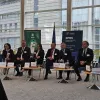
A roundtable is organized on Tuesday at the Academy of Economic Studies (ASE) in Bucharest, within I-MER, a European project led by the Faculty of Business Administration with Teaching in Foreign Languages (FABIZ) within ASE and funded by the European Climate Initiative (EUKI).
It supports Romania and the Czech Republic in the efficient implementation of the new EU Methane Regulation, by strengthening institutional capacity, promoting dialogue between government, business and civil society, and promoting practical solutions for methane reduction in the energy sector.
The project is part of the European Climate Initiative (EUKI) of the German Federal Ministry for the Environment, Climate Action, Nature Conservation and Nuclear Safety (BMUKN).
According to the I-MER project, in 2023, Romania was responsible for 20% of the EU's energy sector methane emissions, based on data from the European Environment Agency. Romania was also responsible for 85% of the methane from abandoned coal mines in the EU.
I-MER specialists argue that Romania is already behind schedule in implementing the provisions of EU Regulation 2024/1787 on the reduction of methane emissions in the energy sector. Thus, "in the absence of the official designation of the competent authority and a clear system of sanctions and monitoring, there is a risk that implementation will remain fragmented."

















Comentează