






Romania's economic recovery must be built on the development of high value added industries and on production diversification, as growth depends directly on economic complexity, says PwC Romania Country Managing Partner Daniel Anghel, in an analysis published on Monday.
According to the research, the Economic Complexity Index developed by Harvard measures the sophistication of economies based on the structure of exports.
'The more categories of sophisticated products a country exports, products that are produced by only a few countries, the more complex its economy is. For example, at the top are industrial equipment for metal processing, electrical transformers or precision electronic components. High complexity means higher added value and higher wages,' the analysis shows.
According to the latest data from the National Institute of Statistics, average net earnings in sectors such as the manufacture of computers, motor vehicles or pharmaceutical products are 25-35% higher than the industry average.
Thus, in order to grow the economy and the overall level of prosperity, the development of complex industries must be stimulated. Statistics indicate a strong correlation between rising complexity and the pace of economic growth.
'Overall, 50 countries that increased their economic complexity over the past ten years recorded average economic growth of 50%. At the opposite end, 50 countries that reduced their complexity saw average growth of only 29%, below the global average of 37%. These include developed economies such as Germany, France and Japan, as well as resource-dependent economies such as Norway, Brazil and Russia. France fell seven positions in the complexity rankings and recorded economic growth of just 10%, while Germany lost two positions, with GDP growth of 20%,' PwC specialists say.
In Romania's case, the correlation between rising complexity and GDP growth is strong. The country ranks 26th out of 145 states analysed, after climbing nine positions over the past decade. At the same time, GDP increased by 83% between 2013 and 2023.


'This evolution was driven by European funds and significant foreign investments. The stock of foreign direct investment increased by 95%, from 60 billion euros in 2013 to 118 billion euros in 2023. In manufacturing, the largest increases in investment were recorded in complex sectors: the production of transport equipment (+135%) and the manufacture of computers and electronic products (+164%). However, projections show that Romania's economy will grow by around 1-2% per year in the coming years. Exports have advanced more slowly than the economy, and dependence on partners and markets in decline is a cause for concern,' the analysis also mentions.
According to the research, more than a quarter of Romania's exports go to Germany and France, and links with German value chains in the automotive sector are strong.
'For Romania, the Harvard analysis indicates broad opportunities. Unlike Germany, which needs technological leaps to identify new growth areas, Romania can advance through incremental steps, capitalising on existing capabilities. Areas with potential, essential for the energy transition and smart networks, include electrical equipment and industrial machinery, electrical panels, electric motors and generators,' the document adds.
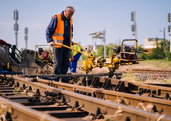
Other promising segments are the railway sector and agricultural machinery.
'These sectors can support growth over the next 5-10 years. However, for the 2035-2040 horizon, the seeds of even more complex industries, such as integrated electronic circuits, must already be planted, as everything from artificial intelligence to electric vehicles relies on these components,' the source says.
The research also shows that Romania will not become a producer of cutting-edge chips like Taiwan in the next 15 years, but it can aim to become a relevant player in the European ecosystem by focusing on chip design and research and development activities or by attracting investments in packaging, assembly and testing, segments where significant European funds are available.
'Diversification cannot be achieved without a mix of existing capabilities and coherent public policies, and the increase in economic complexity rests on three pillars. The first is attracting foreign investments that bring know-how, not just jobs. (...) The second pillar is acquiring know-how through investments by Romanian companies abroad. (...) The third is cultivating the entrepreneurial and start-up ecosystem, which can generate the endogenous innovation needed in the long term,' the authors note.
'All of this must be accompanied by investments in education and vocational training aligned with the needs of growing sectors. Development is a choice, not an accident. Romania is at an inflection point. The evolution of the past decade shows that it can climb the economic complexity ladder, but future challenges, from the reconfiguration of the automotive industry to the energy transition and the advance of artificial intelligence, will test its capacity to adapt,' the analysis further shows.






















Comentează