




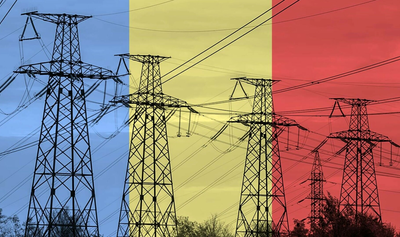


Romania will be affected by rising electricity prices across Europe, where record levels are expected if the situation in the Middle East drags on and the Strait of Hormuz remains closed, Secretary of State with the Energy Ministry Cristian Busoi said on Tuesday.
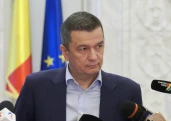
"As the Energy Commissioner has warned, and as public debate across major European countries and in Romania shows, we expect record-high electricity prices because of the high price of gas, unless the Strait of Hormuz is reopened through a miracle or through a decision that cannot be foreseen at this point. If the strait reopens, a dramatic drop in natural gas and fuel prices, including petrol and diesel, is expected. But if the situation in the Middle East continues and the strait remains closed, we expect record electricity prices in the European Union," Busoi told a press conference after a meeting of the Energy Command Centre.
According to the official, Romania's situation will also depend on how long the shutdown of the Cernavoda nuclear power plant units lasts.
"We are in contact with the main electricity suppliers. Even they, despite having all the data and running calculations every day, cannot at this moment predict what their offers to households and large consumers will look like in the coming weeks and months," he said.
Busoi noted that there is no precise estimate at European level of how high prices could rise.
"Even at the meeting of EU energy ministers, no concrete calculation was presented. What is being discussed is a worrying trend. We are looking at the TTF gas exchange, where natural gas prices have reached record levels. We are looking at futures prices for the end of this year and the spring of next year. We are also monitoring gas storage levels in the European Union, which are below the averages of previous years, especially in Germany, the largest consumer of natural gas, particularly for industry."
Busoi pointed out that Romania is facing an exceptionally difficult period from an energy security standpoint, with low Danube water levels and the continued shutdown of Cernavoda's reactors weighing heavily on electricity production.
"We are facing the most difficult and challenging adequacy situation in recent decades. The prolonged period of low Danube flows and low water levels near Cernavoda is severely affecting the nuclear power plant. Both reactors remain offline and hydroelectric production is also being significantly affected. This situation is lasting far longer than expected," he explained.
According to the Secretary of State, weather forecasts indicate that Danube flows at Romania's entry point will remain at historic lows for at least the next ten days.
"At Cernavoda, water levels have fallen significantly over the past 24 hours. This means that, at least until October 15, we will be unable to restart Units 1 and 2, whether individually or together. Specialists will decide whether they can be brought back online one at a time or simultaneously. The good news is that the regional situation is stable. There is no longer the import pressure from Hungary that we saw before, nor from the other countries in the region."


Busoi said natural gas-fired generation units are operating at full capacity, apart from scheduled maintenance works.
"At the Oltenia Energy Complex, the Turceni unit will be restarted on Thursday. Three units will continue to operate in parallel, which is very reassuring from an adequacy standpoint. There are days when wind generation helps us enormously, and days when unfortunately it does not. During peak hours we rely on imports, which in recent days and according to some October forecasts presented today could reach historic highs of around 3,500 MW. I am referring to peak evening hours, particularly around 9 p.m. During daytime hours we have absolutely no problem covering consumption from domestic production."
He stressed that Romania is not currently considering consumption restrictions for large industrial consumers, including during evening peak demand periods.
Asked whether the state is losing money under the energy-price cap scheme, Busoi argued that regulated prices protect households and district heating systems.
"The regulated price for household consumers and centralised heating systems ensures a reasonable price for these consumers during the winter. Romania made the right decision and managed to make its case at European Union level, even if such measures are not always fully compatible with the European philosophy of letting the market decide. At least until the end of March, we will maintain this support measure, especially since we benefit from domestic gas production," Busoi said.
AGERPRES





















Comentează