



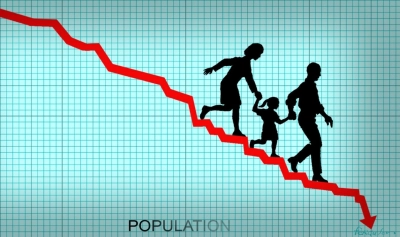


Large-scale emigration has reduced Romania's resident population by around 2.3 million over the past two decades, yet the country is increasingly becoming an attractive destination for foreign workers, according to a study carried out by EY Romania.
The report, "Migration at a Crossroads", analyses the impact of migration on Romania, highlighting both the challenges and opportunities created by a phenomenon that affects the economy as well as social and cultural structures. The authors warn that how Romania manages this balance will directly influence its economic competitiveness.
"Globally, the number of migrants has risen to over 300 million in recent decades, driven by armed conflict, economic instability and social disparities. Within the European Union, migration overlaps with ageing populations and labour shortages, and Romania is no exception," maintain the authors of the study.
Romania faces a dual reality, on the one hand significant emigration of its citizens, particularly among young and highly skilled citizens, on the other hand, rising immigration in response to labour market needs. The war in Ukraine has further intensified these dynamics, bringing a substantial inflow of refugees, mentions the analysis.
"Migration is not purely a social phenomenon; it is also an economic one that affects governments and the business environment. Globally, hundreds of millions of people live outside their country of origin, and Europe remains the main destination. The migration wave can represent an opportunity, but it also carries significant risks. For the Romanian business community, this means conducting thorough checks across the entire migrant recruitment chain and maintaining strict oversight of intermediaries. A more rigorous selection process may entail additional time and higher costs in the medium and long term. However, it protects companies from legal and reputational risks that can directly affect profitability and generate substantial costs to repair reputational damage," said Corina Mindo iu, Partner, People Advisory Services, EY Romania, as quoted in the release.


According to EY, the loss of around 2.3 million residents has affected human capital across all skill levels. Young professionals and specialists have sought better opportunities abroad, leading to labour shortages in key sectors such as information technology, engineering and professional services. Although remittances from Romanians working overseas have supported the domestic economy, the study argues that clearer and more accessible policies are needed to encourage their return, including tax incentives and tailored reintegration programmes.
"This reintegration is all the more important given the visible trend in recent years of a growing number of Romanian citizens returning home after having emigrated. When these individuals fail to reintegrate into the labour market, unemployment rises, placing pressure on both the pension system and the social health insurance system," the study's authors state.
The report contrasts Romania's approach with that of Poland, which has implemented targeted measures to encourage citizens to return, offering financial support, housing assistance and employment opportunities in academia and research.
The study further shows that Romania has begun to emerge as an attractive destination for foreign workers, particularly from countries such as Nepal, Sri Lanka and Turkey. Between 2022 and 2024, Romania recorded a positive migration balance, with more temporary immigrants than temporary emigrants. This shift presents a tangible opportunity to strengthen the country's human resource base, provided these workers are successfully integrated into the labour market.
"Romania is at a stage where it is becoming more relevant as a work destination," said Iulian Pasniciuc, Director, People Advisory Services at EY Romania. He noted that companies face increasing pressure to recruit and retain staff, while Romania's rising household incomes - which grew by 134% in real terms per capita between 2004 and 2024, according to Eurostat - have enhanced its attractiveness.
However, integration remains a challenge. Language barriers, skills mismatches and administrative obstacles can hinder migrants' access to employment. The study calls for closer cooperation between the business community and public authorities to develop effective integration policies.
Since the outbreak of the Russia-Ukraine conflict in February 2022, Romania has also become a major transit corridor for Ukrainian refugees. By April 2025, more than 11.5 million entries of Ukrainian citizens had been recorded, with around 252,000 benefiting from temporary protection. While Romania has primarily served as a transit country rather than a main destination, the presence of working-age refugees represents both a challenge and a potential economic opportunity.
Another aspect highlighted by the study is the growing number of digital nomads choosing to work remotely from Romania, bringing advanced skills and contributing to the local economy by boosting both consumption and innovation. Although Romania has introduced a legal framework to attract digital nomads, further simplification of visa procedures and a reduction in bureaucratic requirements are needed to make the country more appealing to these professionals.
EY concludes that migration can become a competitive advantage if managed strategically, through effective integration policies, support for immigrants and measures to attract skilled professionals and digital nomads.
The analysis is based on extensive secondary research, drawing on EY insights and external data sources, including Eurostat and Romania's National Institute of Statistics. Data for 2024 and 2025 are provisional. Temporary immigrants are defined as individuals relocating to Romania for at least 12 months, while temporary emigrants are those leaving the country for at least one year.




























Comentează