



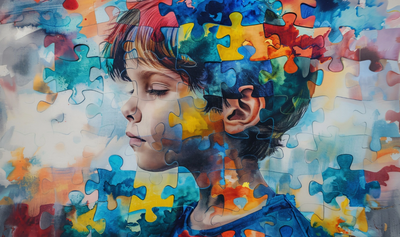


Researchers at the Babes-Bolyai University (UBB) of Cluj-Napoca have published, together with a larger international group, a study on the use of robots psychotherapy for children with autism spectrum disorder (ASD).
"Published in one of the leading scientific journals at international level - Science Robotics (https://www.science.org/doi/10.1126/scirobotics.adl2266) - the study contributes to innovative research in the field of psychotherapeutic treatments and to the integration of technology in the field of healthcare, in the sense of the strategic direction assumed by the UBBMed programme," according to an UBB press statement released on Tuesday.
UBB Rector Daniel David, one of the authors of the study, shows that "in Romania, we introduced this approach years ago, inspired by the idea, incipient then, that if children with ASD have a great openness to interact with robots, they can be used as platforms through which children with ASD can learn the social skills they need to interact socially and develop a life as autonomous as possible."
"Over time, we proceeded methodically, with increasingly complex studies, based on fundamental research, and then on applied research, culminating in this publication. The main idea that results from this research is that it seems that the involvement of the robot can maintain the child's engagement in psychotherapy, which is fundamental when psychotherapy is long-lasting (months-years) and is carried out intensively (several sessions per week and several hours in a day). So, in our approach, technology (here robots) does not replace the human psychotherapist, but, as these results suggest, it could become a tool to help children with ASD become more efficient in human interactions and have a more autonomous life. Starting from these optimistic results, our future studies must now emphasise the applicative component, for an ecological conclusion as clear as possible," said David.

























Comentează