



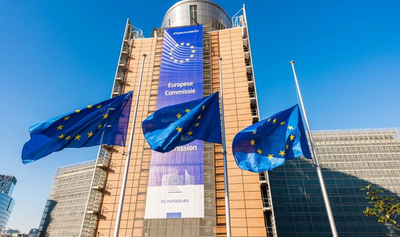


Without European funds, Romania would not have had so many infrastructure projects, investment in education and healthcare, funding for Romanian businesses, and that is why Romania cannot afford to stray from this path, according to Romania's Minister of European Investment and Projects Marcel Bolos.
"The International Monetary Fund (IMF) confirms what we already know: we cannot have economic development and financial stability without European money. We have a choice to make. Do we continue on the path of investment and reforms, accessing the more than EUR 72 billion made available by the European Union, or do we let ourselves be caught up in the illusion that we could succeed on our own, without such resources? Why do we have more equipped hospitals, better roads, business support, digital transformation in administration today? The answer is simple: because we have used European resources smartly. Because we were part of a larger project, which opened the doors of development to us. There are voices that propagate mistrust, that suggest that our membership of the European Union has not brought us benefits. But the reality is undeniable: without these funds, Romania would not have had so many infrastructure projects, investment in education and healthcare, financing for Romanian businesses. Romania cannot afford to stray from this path," the minister wrote in a social media post on Wednesday.
According to him, Romania has a surplus of EUR 66.6 billion in its relationship with the European Union.
"In 2009, the level of public investment was RON 35 billion, including European funding worth RON 2.7 billion. Currently, the programmed public investments are worth RON 150 billion, including over RON100 billion worth of European funds. These are indisputable challenges, they mean an enormous amount of work, which in recent years has involved negotiating funds of EUR 80 billion with the European Commission, programming a National Recovery and Resilience Plan, implementing reforms and investment, decentralising European funds and investment in infrastructure and approving new programmes under the Cohesion Policy," said Bolos.
He added that 2025 is a decisive year, because absorption must be sped up, as unused resources are lost opportunities. Thus, the main measures, as afar as his ministry is concerned include establishing a clear timing of launches to avoid overlaps, allocating the necessary resources for the evaluation and selection of projects, accelerating implementation by improving the MySMIS2021/SMIS2021+ platform, monitoring progress based on clear indicators, simplifying procedures by eliminating addenda where they are not necessary and improving collaboration to verify projects faster and more efficient.
"We must complete the reforms undertaken. Some are difficult, requiring effort and determination, but without them we cannot build a modern economy, an efficient administration and a strong state. Improving the business environment, the digital transformation of the administration, increasing the efficiency of revenue collection and the sustainability of public finances are objectives that cannot be postponed. We need an efficient judiciary, a sustainable pension system, sound corporate governance and modern public administration. Any hesitation would cost us more than the effort to carry out these reforms. We should remain committed to our European path, avoiding populist speeches that promise easy solutions, but which would plunge Romania into a real funding and investment crisis. This is the right way. Everything else is just illusion and disillusionment", pointed out Marcel Boloş.


















Comentează